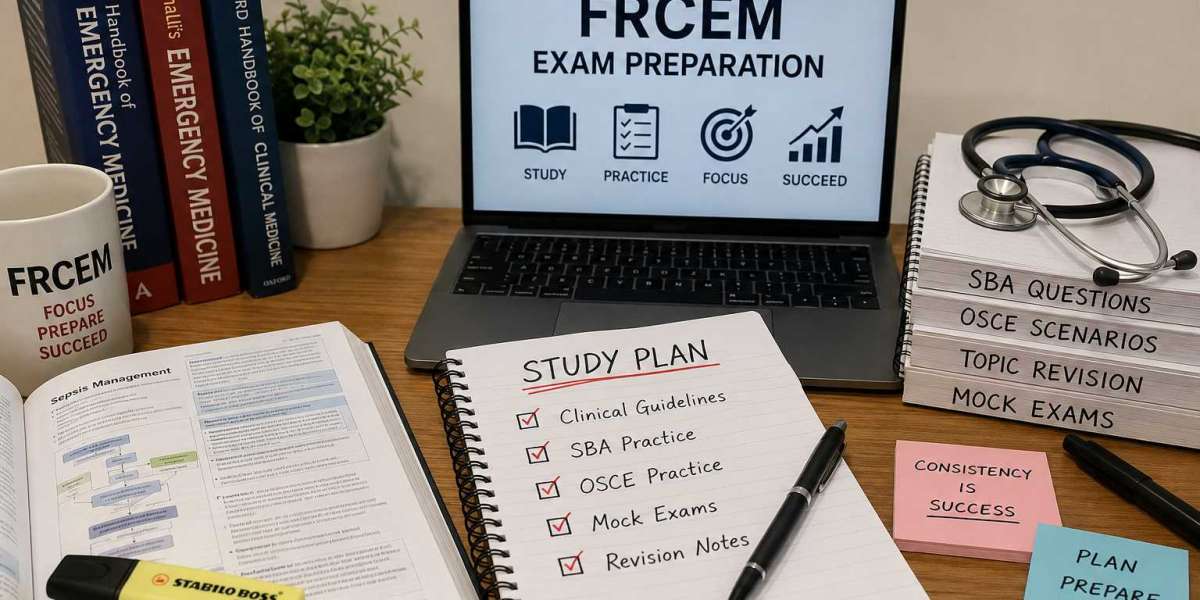

FRCEM Exam Preparation: Complete Guide to Pass the Exam
The FRCEM (Fellowship of the Royal College of Emergency Medicine) examination is one of the most important milestones for doctors pursuing a career in emergency medicine. Proper FRCEM exam preparation requires a structured study plan, reliable resources, and consistent practice. Whether you're preparing for the SBA, OSCE, or Final FRCEM examination, having the right strategy can significantly improve your chances of success.
What Is the FRCEM Exam?
The FRCEM examination is conducted by the Royal College of Emergency Medicine (RCEM) in the UK. It assesses the knowledge, clinical reasoning, and practical skills required for consultants in emergency medicine.
The exam consists of different stages, including:
- FRCEM Primary
- Intermediate SBA
- Intermediate OSCE
- Final SBA
- Final OSCE
Each stage evaluates different competencies, making thorough preparation essential.
Why Is FRCEM Exam Preparation Important?
The FRCEM exam covers a broad range of emergency medicine topics, including trauma, critical care, paediatrics, toxicology, cardiology, and medical emergencies. A well-planned preparation strategy helps candidates:
- Build strong clinical knowledge.
- Improve decision-making skills.
- Gain confidence for practical assessments.
- Reduce exam stress.
- Increase first-attempt pass rates.
Create a Structured Study Plan
A realistic study schedule is the foundation of successful FRCEM exam preparation.
Week-by-Week Planning
Your study plan should include:
- Daily reading sessions.
- Weekly revision.
- Practice question sessions.
- Mock examinations.
- OSCE practice with colleagues.
Consistency is more effective than studying for long hours at the last minute.
Best Resources for FRCEM Exam Preparation
Choosing high-quality study materials is essential.
Recommended resources include:
- RCEM Curriculum
- Clinical guidelines
- National Institute for Health and Care Excellence (NICE) guidelines
- Oxford Handbook of Emergency Medicine
- Clinical examination books
- Online question banks
- Mock examinations
- Revision courses
Using multiple resources helps reinforce learning and exposes you to different question styles.
Practice SBA Questions Regularly
Single Best Answer (SBA) questions are an important part of the examination.
Regular practice helps you:
- Understand exam patterns.
- Improve speed.
- Identify weak topics.
- Build confidence.
Review every incorrect answer to understand the reasoning behind the correct option.
Prepare for the OSCE
The Objective Structured Clinical Examination (OSCE) assesses communication, clinical examination, and practical skills.
Focus on:
- Patient assessment.
- History taking.
- Communication skills.
- Emergency procedures.
- ECG interpretation.
- X-ray interpretation.
- Trauma scenarios.
Practising with peers is one of the most effective ways to prepare.
Master Emergency Medicine Guidelines
Many FRCEM questions are based on current clinical guidelines.
Stay updated with recommendations for:
- Sepsis
- Stroke
- Acute coronary syndrome
- Trauma management
- Airway emergencies
- Paediatric emergencies
- Major incident management
Understanding the rationale behind each guideline is just as important as memorising it.
Improve Time Management
Time management is often overlooked during FRCEM exam preparation.
During practice:
- Simulate real exam conditions.
- Set time limits.
- Avoid spending too long on difficult questions.
- Review flagged questions at the end.
Efficient time management can significantly improve your final score.
Join Study Groups
Learning with other candidates offers several benefits:
- Discuss difficult topics.
- Share study resources.
- Practise OSCE stations.
- Stay motivated.
- Learn different clinical approaches.
Collaborative learning often leads to better understanding and retention.
Revise Weak Areas
After each mock exam, identify subjects where your performance is weaker.
Common challenging areas include:
- ECG interpretation
- Toxicology
- Paediatric emergencies
- Trauma
- Critical care
- Airway management
Spend additional revision time on these topics while maintaining your strengths.
Take Mock Exams
Mock examinations help simulate the actual exam environment.
Benefits include:
- Improved confidence.
- Better time management.
- Reduced anxiety.
- Familiarity with question formats.
- Identification of knowledge gaps.
Aim to complete multiple mock exams before your test date.
Exam Day Tips
On exam day:
- Get enough sleep the night before.
- Arrive early.
- Read each question carefully.
- Manage your time effectively.
- Stay calm and focused.
- Trust your preparation.
Maintaining a positive mindset can help you perform at your best.
Common Mistakes to Avoid
Avoid these common preparation mistakes:
- Starting revision too late.
- Ignoring clinical guidelines.
- Not practising SBA questions.
- Skipping OSCE practice.
- Studying without a timetable.
- Neglecting mock exams.
- Failing to review incorrect answers.
Recognising these pitfalls can improve your overall preparation.
Final Thoughts
Successful FRCEM exam preparation requires dedication, organisation, and consistent revision. By following a structured study plan, using trusted learning resources, practising SBA questions, refining OSCE skills, and completing regular mock exams, you can maximise your chances of passing the examination. Begin your preparation early, stay consistent, and focus on understanding clinical concepts rather than memorising facts. With the right strategy and commitment, you can approach the FRCEM exam with confidence and achieve your career goals in emergency medicine.