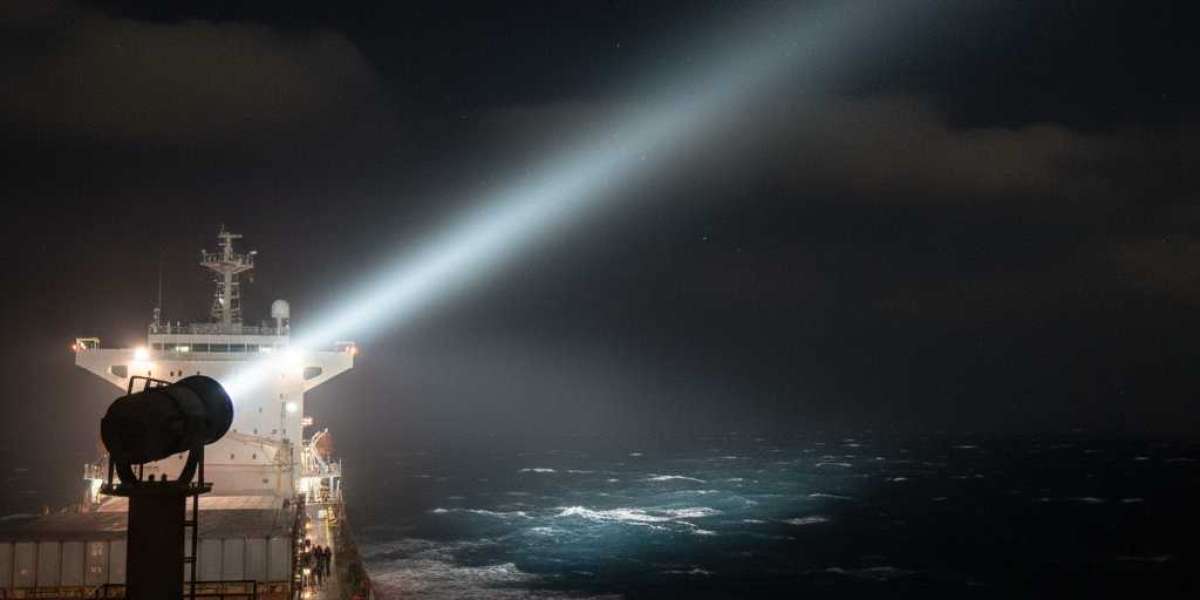

When navigating at sea, visibility can mean the difference between a safe voyage and a costly accident. Whether operating a cargo vessel, patrol boat, fishing vessel, or offshore platform, a reliable marine searchlight is one of the most important tools for nighttime operations.
A common question among vessel operators is:
How far can a marine searchlight illuminate?
The answer is not as simple as a single number. The illumination distance depends on several factors, including light intensity, beam angle, weather conditions, mounting height, and the type of target being illuminated.
In this guide, we'll explore the real-world range of marine searchlights, the factors that influence their performance, and how to select the right searchlight for your vessel.
Understanding Marine Searchlight Range
When manufacturers specify the range of a marine searchlight, they usually refer to the maximum distance at which the beam can provide useful illumination under ideal conditions.
Modern marine searchlights generally fall into the following categories:
| Searchlight Type | Typical Beam Distance |
|---|---|
| Small LED Searchlight | 300–800 meters |
| Medium Marine Searchlight | 800–2,000 meters |
| High-Power Marine Searchlight | 2–5 kilometers |
| Specialized Long-Range Searchlight | 5–10+ kilometers |
However, these figures represent laboratory or ideal environmental conditions. Actual visibility at sea can vary significantly.
For example, a searchlight capable of illuminating an object 5 km away on a clear night may only provide useful visibility at 1–2 km during fog, rain, or rough sea conditions.
What Determines How Far a Marine Searchlight Can Shine?
1. Light Intensity (Lumens and Candela)
Many people focus on lumens when comparing searchlights, but for long-distance illumination, candela is often more important.
- Lumens measure total light output.
- Candela measures beam intensity in a specific direction.
A searchlight with a concentrated beam can illuminate farther even if its total lumen output is lower than a flood-style light.
For marine navigation, high candela ratings are usually preferred because they project light farther across open water.
2. Beam Angle
Beam angle has a major impact on illumination distance.
Narrow Beam
- Typically 1°–10°
- Longer range
- Ideal for locating buoys, obstacles, or distant vessels
Wide Beam
- Typically 20°–60°
- Better area coverage
- Shorter illumination distance
A narrow beam acts much like a spotlight, concentrating light energy into a smaller area and extending the effective range.
3. Mounting Height
The height of the searchlight above sea level affects how much of the beam reaches distant targets.
A searchlight installed on:
- Vessel mast
- Bridge roof
- Elevated platform
can illuminate farther than the same light mounted at deck level.
Higher mounting positions also help reduce reflections from waves and spray.
4. Atmospheric Conditions
Weather often becomes the biggest limitation.
Even the most powerful marine searchlight cannot overcome dense fog or heavy precipitation.
Typical impacts include:
| Condition | Effect on Range |
| Clear Night | Maximum range |
| Light Rain | 10–20% reduction |
| Heavy Rain | 30–50% reduction |
| Fog | Up to 80% reduction |
| Sea Spray | Significant glare and scatter |
This is why many commercial vessels combine searchlights with radar, AIS, and navigation systems.
5. Target Reflectivity
The object being illuminated also matters.
Highly reflective surfaces are easier to detect than dark objects.
Examples:
- White navigation buoys = highly visible
- Reflective vessel markings = highly visible
- Dark floating debris = difficult to detect
- Persons overboard = challenging target
A searchlight may technically reach several kilometers, but identifying a small dark object at that distance may still be impossible.
How Far Does an LED Marine Searchlight Illuminate?
Modern LED technology has dramatically improved marine searchlight performance.
Compared with traditional halogen or xenon systems, LED marine searchlights offer:
- Higher energy efficiency
- Longer service life
- Lower maintenance
- Faster start-up
- Improved vibration resistance
A high-quality LED marine searchlight can typically provide:
- 1–3 km useful visibility for general navigation
- 3–5 km for obstacle detection
- Up to 10 km for specialized long-range systems
For most commercial and industrial marine applications, a range between 2 and 5 kilometers is sufficient.
Practical Applications of Long-Range Marine Searchlights
Navigation Safety
Searchlights help crews identify:
- Buoys
- Channel markers
- Harbor entrances
- Floating hazards
especially when visibility is limited.
Search and Rescue Operations
Rescue teams use high-intensity marine searchlights to locate:
- Persons overboard
- Life rafts
- Distress signals
- Small craft
In these situations, beam focus and reliability are often more important than raw lumen output.
Security and Surveillance
Port authorities, coast guards, and offshore facilities use searchlights to monitor:
- Restricted zones
- Approaching vessels
- Unauthorized activity
Long-range illumination enhances situational awareness during nighttime operations.
Offshore Platforms
Oil and gas platforms frequently require powerful searchlights for:
- Helicopter operations
- Supply vessel approaches
- Emergency response
- Personnel transfer activities
These applications demand equipment capable of operating continuously in harsh marine environments.
Choosing the Right Marine Searchlight
When selecting a marine searchlight, consider more than just maximum range.
Key factors include:
Vessel Type
Different vessels have different lighting requirements.
- Fishing boats may prioritize wide coverage.
- Patrol vessels often need long-range targeting.
- Cargo ships require reliable navigation illumination.
Environmental Conditions
Consider where the vessel operates.
- Coastal waters
- Open ocean
- Arctic regions
- Tropical environments
Each environment presents unique visibility challenges.
Durability
Marine searchlights should withstand:
- Saltwater corrosion
- High humidity
- Shock and vibration
- Extreme temperatures
Durability is often just as important as brightness.
Control Options
Many modern systems offer:
- Remote control operation
- Motorized rotation
- Vertical tilt adjustment
- Integration with bridge systems
These features improve operational efficiency and crew safety.
Why Professional-Grade Marine Searchlights Matter
Many low-cost searchlights advertise impressive lumen figures but fail to deliver practical long-range performance.
Professional marine searchlights are engineered with:
- Precision optics
- High-intensity beam control
- Marine-grade housing
- Reliable thermal management
This ensures consistent performance even during prolonged operation in demanding environments.
For commercial vessels, offshore installations, and naval applications, investing in a high-quality marine searchlight often results in better visibility, improved safety, and lower lifecycle costs.
Conclusion
So, how far can a marine searchlight illuminate?
In real-world conditions, most marine searchlights provide useful visibility from several hundred meters to more than 5 kilometers, while specialized long-range systems can exceed 10 kilometers under ideal conditions.
However, illumination distance depends on far more than raw power. Beam angle, mounting height, weather, target characteristics, and optical design all influence actual performance.
When selecting a marine searchlight, the goal should not simply be choosing the brightest light. Instead, focus on finding a system that delivers reliable, long-range visibility while withstanding the demanding conditions of the marine environment.
A properly designed marine searchlight remains one of the most valuable safety tools aboard any vessel, helping crews navigate confidently and respond effectively when visibility matters most.