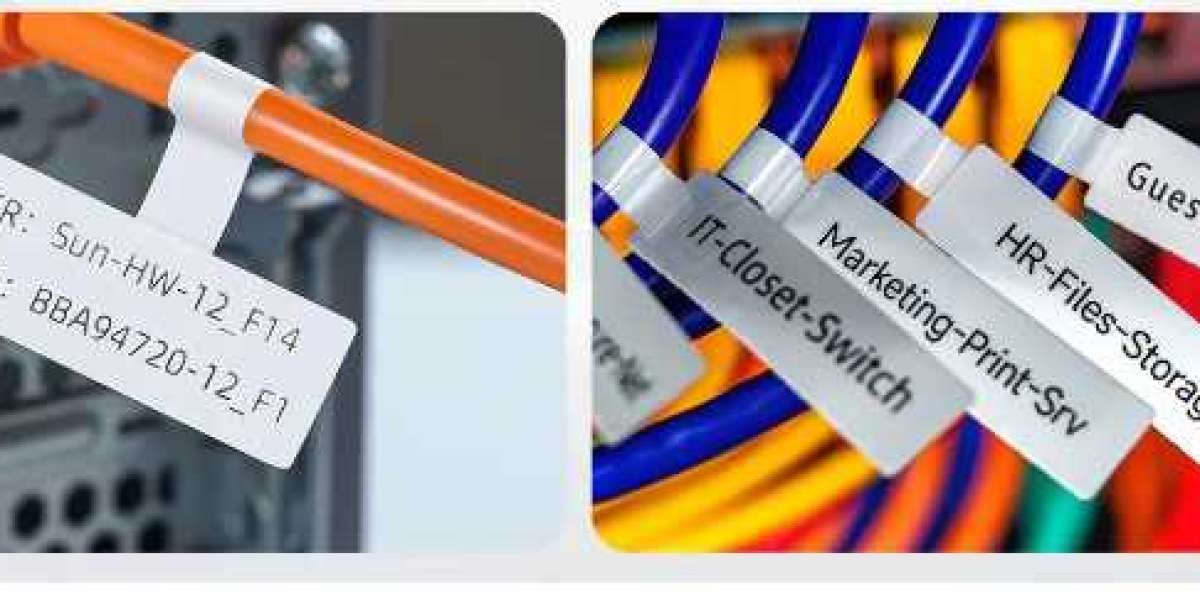

Multi-story telecom campuses with hundreds of permanent Cat6 horizontal backbone runs face unique labeling hurdles that patch panel-focused guides rarely address, including extreme cable bundle density, long-term abrasion from cable tray movement, and mandatory cross-floor traceability required by BICSI campus infrastructure standards. The choice between T-flag and wrap-around Cat6 cable labels directly impacts 10+ year cable plant durability and audit readiness, yet most installers default to one format without matching it to backbone environmental stressors. This solution-focused piece outlines core campus telecom labeling pain points, breaks down traditional tag failure modes, lists non-negotiable solution features, maps T-flag/wrap deployment to inter-floor Cat6 runs, quantifies long-term maintenance savings, and guides compliant portable label printing implementation.
Real Pain Points Telecom Teams Face With Unstandardized Cat6 Labeling
ANSI/TIA-606-C requires fully legible cable identification for the full service life of Cat6 backbone infrastructure, typically a minimum 10-year lifecycle. Temporary labeling formats degrade within 2–3 years, forcing costly full re-labeling of every inter-floor run mid-infrastructure lifespan.
Cat6 backbone cables shift inside metal cable trays under building HVAC vibration and foot traffic above ceiling plenums; unprotected printed labels wear away rapidly from repeated friction, leaving no way to trace floor-to-IDF/MDF trunk lines during building renovations.
Overstuffed cable trays stacked with inter-floor Cat6 runs cannot accommodate protruding T-flag tags without creating tight airflow restrictions, violating local fire code ventilation rules for telecom plenums.
Failures Root Flaws of Traditional Cable Labeling Methods
Paper or thin plastic T-flags absorb moisture from ceiling plenum cooling systems, splitting at the fold point and separating from Cat6 cables within 18 months of installation. Lost tags create untraceable cross-floor trunk lines that require full cable toning to map.
Generic adhesive wrap labels lack a clear protective laminate layer; constant rubbing against metal cable tray edges scrapes printed cable ID text off Cat6 jackets, rendering labels useless long before the network’s planned refresh cycle.
While heat shrink offers durability, manual marking and post-termination application adds 2+ minutes of labor per Cat6 run, multiplying labor hours exponentially on campus deployments with 500+ inter-floor backbone cables.
Non-Negotiable Capabilities a Qualified Cat6 Labeling Solution Must Deliver
Self-laminating wrap tape construction with scratch-proof UV-stabilized protective film for tray abrasion resistance
Dual-format printing capability to generate slim wrap tags for bundles and compact anti-snag T-flags for IDF patch panel terminations
Thermal transfer print technology with oil/condensation-resistant pigment ink for plenum humidity exposure
Portable battery-powered printing to generate custom labels on-site during multi-floor backbone installation, eliminating pre-print batch limitations
TIA-606-C compliant permanent adhesive formulated to bond securely to Cat6 PE outer jackets without peeling under vibration
Targeted Deployment: T-Flag vs Wrap-Around Cat6 Labels Step-by-Step Implementation
Wrap-Around Self-Laminating Labels: Exclusive for Ceiling/Underfloor Backbone Bundles
All long horizontal Cat6 trunk lines routed through metal cable trays between building floors require full self-laminating wrap-around labels. Their flat, encased design sits flush against cable jackets to avoid airflow blockages in dense 30+ cable bundles, while the clear laminate layer protects printed IDs from years of tray friction and plenum humidity. Apply two wrap labels per run: one at the MDF main distribution frame and one at each floor’s IDF telecommunications room to satisfy dual-end traceability rules.
Compact Anti-Snag T-Flag Labels: Limited Use at IDF Patch Panel Termination Points
Reserve reinforced, low-profile T-flag labels solely for the short 30cm Cat6 jumpers connecting backbone trunks to IDF patch panels. The extended flag surface lets technicians read cross-floor origin/destination codes without rotating thick backbone cables inside cramped telecom closets, while reinforced laminate prevents tearing during frequent MAC reconfigurations at patch bays. Never deploy standard bulky T-flags on main trunk bundles inside cable trays.
Tangible Long-Term Business Value Measurable Operational ROI
A 2026 BICSI campus infrastructure survey measured cost differences between standardized wrap/T-flag labeling versus temporary paper tags for multi-story telecom campuses:
Mid-cycle full cable re-labeling labor costs eliminated, saving an average $14,700 per 5-floor campus over 10 years
Renovation cable tracing time reduced 70%, cutting contracted low-voltage installer overtime during building remodels
Fire code audit violations related to blocked cable tray airflow dropped to zero after replacing protruding T-flags with flush wrap-around backbone labels
Extended Cat6 backbone usable lifespan by reducing abrasion jacket damage, delaying campus-wide cabling replacement capital expenditure
Multi-story campus backbone deployments demand labeling hardware capable of printing both abrasion-resistant wrap-around tags and reinforced compact T-flags without third-party pre-order delays. The MakeID EP53 portable industrial label printer delivers thermal transfer on-site printing for all TIA-606-C compliant Cat6 cable label formats, built to withstand job site plenum installation environments.