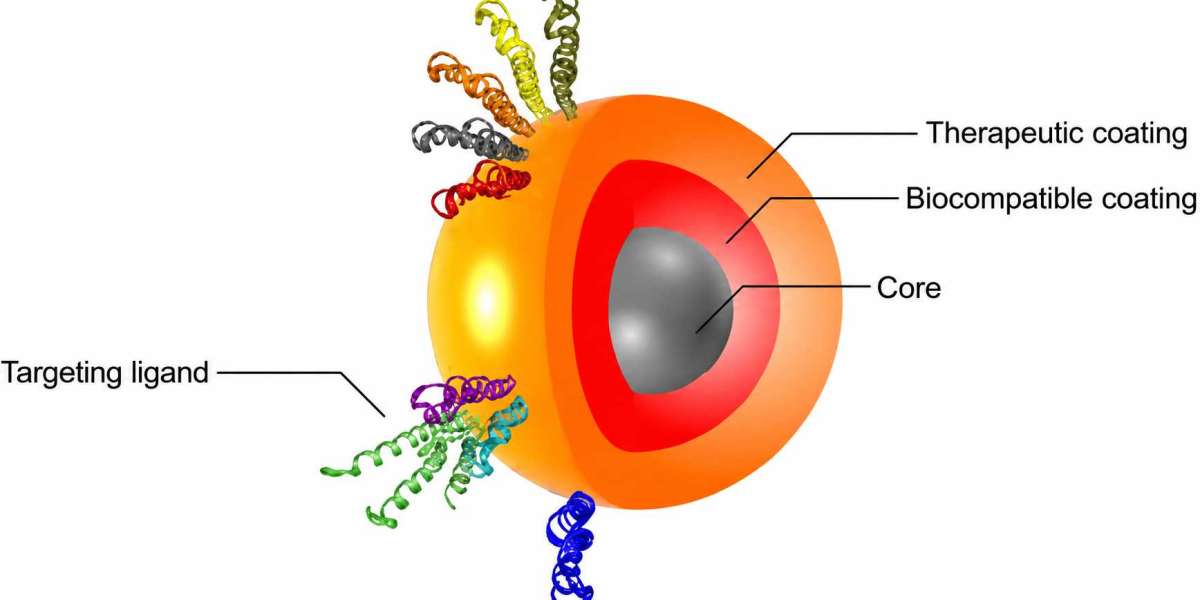

Polyelectrolyte coated nanoparticle SPIONs have become an important area of research in nanotechnology and biomedical science. SPION stands for Superparamagnetic Iron Oxide Nanoparticles, which are tiny magnetic particles that exhibit unique magnetic properties when exposed to an external magnetic field. When these nanoparticles are coated with polyelectrolytes, their stability, biocompatibility, and functionality are significantly improved. As a result, they are increasingly used in drug delivery, medical imaging, cancer treatment, biosensing, and environmental applications.
What Are Polyelectrolyte Coated Nanoparticle SPIONs?
Polyelectrolyte coated nanoparticle SPIONs are superparamagnetic iron oxide nanoparticles that are surrounded by a layer of charged polymer molecules known as polyelectrolytes. The coating acts as a protective shell that prevents particle aggregation and enhances interaction with biological systems. This combination of magnetic properties and surface functionality makes these nanoparticles highly valuable for advanced scientific and medical applications where precision and control are essential.
Understanding Superparamagnetic Iron Oxide Nanoparticles
Superparamagnetic iron oxide nanoparticles are nanoscale particles composed mainly of iron oxide compounds such as magnetite or maghemite. These particles display magnetic behavior only when an external magnetic field is applied and lose their magnetism once the field is removed. This unique property reduces particle clumping and makes SPIONs safer for biomedical applications, particularly in targeted therapies and diagnostic procedures.
What Are Polyelectrolytes?
Polyelectrolytes are polymers that contain multiple ionizable groups along their molecular chains, allowing them to carry positive or negative charges in solution. These charged polymers can strongly interact with nanoparticles and biological molecules, creating stable coatings around SPIONs. The presence of polyelectrolytes improves nanoparticle dispersion, enhances biocompatibility, and provides functional groups that can be used for drug attachment or molecular targeting.
Structure of Polyelectrolyte Coated SPIONs
The structure of a polyelectrolyte coated SPION typically consists of a magnetic iron oxide core surrounded by one or more layers of charged polymer coatings. The iron oxide core provides magnetic functionality, while the polyelectrolyte shell enhances stability and surface activity. This layered structure enables researchers to customize the nanoparticle surface for specific applications such as targeted drug delivery, imaging, or biosensing.
Importance of Surface Coating in SPIONs
Surface coating plays a crucial role in determining the performance and safety of SPIONs in various environments. Without a protective coating, nanoparticles may aggregate, lose stability, or trigger unwanted biological responses. Polyelectrolyte coatings create a barrier that improves colloidal stability, reduces toxicity, and allows controlled interactions with cells, tissues, and biological molecules, making them suitable for medical and industrial use.
Synthesis of Polyelectrolyte Coated Nanoparticle SPIONs
The synthesis of polyelectrolyte coated SPIONs generally involves producing iron oxide nanoparticles through chemical methods and then applying a polyelectrolyte coating. Techniques such as co-precipitation, thermal decomposition, and hydrothermal synthesis are commonly used to create SPIONs. After nanoparticle formation, polyelectrolytes are deposited onto the surface through electrostatic interactions, resulting in stable and functionalized nanostructures.
Layer-by-Layer Assembly Technique
One of the most popular methods for coating SPIONs is the layer-by-layer assembly technique. In this process, alternating layers of positively and negatively charged polyelectrolytes are deposited onto the nanoparticle surface. This approach allows precise control over coating thickness, surface charge, and functionality, enabling researchers to design nanoparticles with customized properties for specific applications.
Physical Properties of Polyelectrolyte Coated SPIONs
Polyelectrolyte coated SPIONs possess unique physical properties including nanoscale size, high surface area, magnetic responsiveness, and excellent colloidal stability. These characteristics allow them to move efficiently through biological systems and respond to external magnetic fields. Their tunable surface chemistry further enhances their usefulness in research, diagnostics, and therapeutic applications.
Chemical Stability and Biocompatibility
The addition of polyelectrolyte coatings significantly improves the chemical stability and biocompatibility of SPIONs. The coating protects the iron oxide core from oxidation and degradation while reducing direct contact with biological tissues. This minimizes potential toxicity and improves compatibility with cells and biological fluids, making the nanoparticles safer for clinical and biomedical applications.
Applications in Drug Delivery
Polyelectrolyte coated SPIONs are widely studied for targeted drug delivery systems because they can transport therapeutic agents directly to specific locations within the body. The magnetic core allows external magnetic fields to guide the nanoparticles toward diseased tissues, while the polyelectrolyte coating provides attachment sites for drugs. This targeted approach can improve treatment effectiveness and reduce side effects associated with conventional drug administration.
Role in Magnetic Resonance Imaging
Magnetic Resonance Imaging (MRI) is one of the most important biomedical applications of SPIONs. Polyelectrolyte coated nanoparticles serve as contrast agents that enhance image quality and improve the visibility of tissues and organs. Their magnetic properties influence the MRI signal, allowing healthcare professionals to obtain more accurate diagnostic information for disease detection and monitoring.
Applications in Cancer Therapy
Cancer treatment has benefited significantly from advancements in nanoparticle technology, including the use of polyelectrolyte coated SPIONs. These nanoparticles can be directed toward tumor sites using magnetic fields and may carry anticancer drugs directly to cancerous tissues. Some studies also explore magnetic hyperthermia, where SPIONs generate localized heat under alternating magnetic fields to destroy cancer cells while minimizing damage to healthy tissues.
Use in Biosensing Technologies
Polyelectrolyte coated SPIONs play an important role in biosensor development due to their magnetic properties and functional surfaces. Researchers can modify the coating with biological recognition molecules such as antibodies or enzymes to detect specific biomarkers. These biosensors offer high sensitivity and rapid response times, making them valuable tools in medical diagnostics and environmental monitoring.
Environmental Applications
Beyond biomedical fields, polyelectrolyte coated SPIONs are increasingly used in environmental applications such as water treatment and pollutant removal. Their large surface area and customizable coatings allow them to capture contaminants effectively. Additionally, their magnetic properties enable easy separation from treated water using external magnetic fields, improving efficiency and reducing operational costs.
Advantages of Polyelectrolyte Coated SPIONs
Polyelectrolyte coated SPIONs offer several advantages including enhanced stability, improved biocompatibility, magnetic responsiveness, customizable surface chemistry, and efficient targeting capabilities. These benefits make them highly versatile materials for a wide range of scientific and industrial applications. Their ability to combine magnetic control with functional surface modifications is one of their most significant strengths.
Challenges and Limitations
Despite their promising potential, polyelectrolyte coated SPIONs still face several challenges. Researchers must address issues related to large-scale production, long-term stability, reproducibility, and regulatory approval. Understanding nanoparticle interactions within complex biological systems also remains an important area of investigation before widespread clinical adoption can occur.
Future Research Directions
Future research on polyelectrolyte coated nanoparticle SPIONs focuses on developing smarter and more efficient nanomaterials for personalized medicine and advanced diagnostics. Scientists are exploring multifunctional coatings, improved targeting mechanisms, and biodegradable materials that can enhance safety and performance. Advances in nanotechnology are expected to expand the capabilities of these nanoparticles across healthcare, environmental science, and industrial applications.
Industrial Significance
Industries are increasingly recognizing the value of polyelectrolyte coated SPIONs due to their unique combination of magnetic and surface properties. These nanoparticles are being explored for use in catalysis, separation technologies, electronic devices, and advanced manufacturing processes. Their versatility allows them to contribute to innovations across multiple sectors beyond traditional biomedical applications.
Conclusion
Polyelectrolyte coated nanoparticle SPIONs represent a significant advancement in the field of nanotechnology, combining the magnetic properties of superparamagnetic iron oxide nanoparticles with the stability and functionality provided by polyelectrolyte coatings. Their applications span drug delivery, MRI imaging, cancer therapy, biosensing, environmental remediation, and industrial processes. As research continues to advance, these nanoparticles are expected to play an increasingly important role in developing innovative solutions for healthcare, environmental protection, and technological progress.