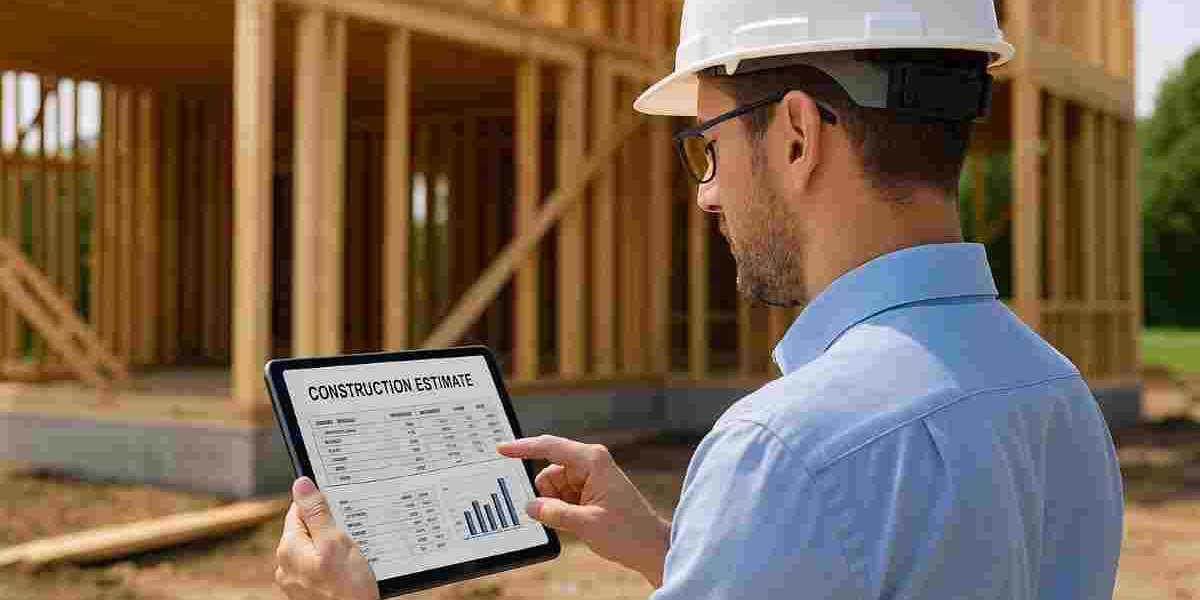

Construction Cost Estimating Services vs In-House Estimator Cost
You're staring at a job posting draft for a full-time estimator. Salary, benefits, software licenses, a laptop, maybe a truck allowance. The number is already uncomfortable, and you haven't even hired anyone yet.
Here's the harder part. Even after you make that hire, one person can only chase so many bids in a month. Slow season, they're half idle and still on payroll. Busy season, they're drowning and your bids go out late, thin, or both.
Meanwhile a competitor down the street is scaling estimating capacity up and down with demand, paying only for what they use, and somehow still winning more work than you.
This is the exact comparison worth running honestly before you commit to either path. Professional residential construction estimating services solve a real cost and capacity problem that an in-house hire often can't, and understanding construction estimating services in USA pricing models will show you why. Let's break down the real numbers, not the assumptions.
What Are Construction Cost Estimating Services?
Before comparing costs, it helps to be clear on what you're actually buying. These services produce a defensible construction cost figure using current material pricing, labor productivity data, and site-specific conditions, then classify it based on where your project sits in the design process.
That classification matters because a rough concept-stage number and a final bid number serve completely different purposes.
Estimate Class / Level | Purpose of the Estimate | Expected Accuracy Range | Data Required to Prepare |
Class 5: Concept Screening | Feasibility studies, initial capital planning. | ±30% to ±100% | Basic square footage, historical project types. |
Class 3: Budget Authorization | Securing construction financing, owner approval. | ±10% to ±30% | Schematic designs, preliminary site details. |
Class 1: Definitive / Bid | Final tender submission, subcontractor buying. | -5% to +15% | Fully completed blueprints, finalized specs. |
An in-house estimator can, in theory, produce work across all three classes. The question isn't whether they're capable. It's whether the economics of keeping that capability in-house actually make sense for your volume of work.
The Real Cost of an In-House Estimator
A fully loaded in-house estimator salary in most US markets lands somewhere between $75,000 and $110,000 a year once you include payroll taxes and benefits.
Add estimating software licenses, ongoing training on updated material databases, and the simple fact that one person has a ceiling on how many active bids they can carry at once.
Then factor in the gaps. Vacation weeks. Sick days. The three months between when your last estimator quit and when you finally filled the role.
During every one of those gaps, bids either go out late or don't go out at all. That's lost revenue that rarely shows up on a spreadsheet, but it's real.
The Zip-Code Precision Estimating Framework
Here's the part that changes the comparison entirely, and most contractors never hear it explained clearly.
A generic estimate built on broad city-level or regional averages can miss local reality by a wide margin. Labor rates in one zip code differ meaningfully from a market thirty miles away. Supplier delivery costs shift based on actual distance from the yard, not a regional average.
This is the Zip-Code Precision Estimating Framework: pulling data down to the specific zip code rather than applying a citywide blanket rate. Local labor productivity indices, live supplier pricing feeds, and jurisdiction-specific permitting costs all get folded into the number.
Skip this precision, and projects built on broad averages instead of localized data commonly see a 20% to 25% overrun once real subcontractor bids come back.
A solo in-house estimator, however skilled, rarely has access to the same breadth of live regional data that a dedicated estimating firm maintains across dozens of active markets simultaneously. That firm is pulling real-time supplier syncs and productivity benchmarks across a wider footprint than one person managing one region ever could.
Real-Time Supplier Syncs
Material costs shift week to week in a volatile supply environment. A firm plugged into live supplier feeds catches that movement before it becomes a change order headache.
Local Productivity Indices
Crew output varies by market, sometimes significantly. Applying a national default productivity rate instead of a local one is a quiet but common source of budget drift.
Scalability: The Factor Most Cost Comparisons Miss
An in-house estimator is a fixed cost no matter how many bids you're chasing that month.
Residential construction estimating services work differently. You pay per project or per bid package, scaling up during a busy quarter and scaling down without carrying idle payroll during a slow one.
For a contractor bidding 15 to 20 residential projects a year, that flexibility alone often outweighs the per-estimate cost difference.
When an In-House Hire Still Makes Sense
To be fair, in-house isn't always the wrong call. A high-volume production builder running dozens of near-identical unit types can sometimes justify a dedicated internal hire, because the repetition creates efficiency an outside firm can't replicate as cheaply.
The math shifts in favor of outsourcing mainly once your projects vary in scope, region, or asset type, since that variability is exactly what an outside firm with broader market data handles better.
A Quick Case Study: Custom Home Builder, Coastal Carolina
A custom home builder averaging 12 projects a year had one in-house estimator handling everything, salary plus software totaling around $92,000 annually.
During a growth year, bid volume jumped to 19 projects. The estimator fell behind, three bids went out late, and two of those were lost to competitors who submitted on time.
The builder shifted to outsourced construction cost estimating services, paying per project instead of a fixed salary. Total annual spend actually dropped slightly, bid turnaround improved, and the builder picked up four additional wins that year they attributed directly to faster, more accurate submissions.
Third-Party Estimator Vetting Checklist
Before signing with an outside estimating partner, run through this list.
- [ ] Does the service use localized zip-code pricing or broad national averages?
- [ ] Do they provide editable source files (e.g., Excel, PlanSwift) or flat PDFs?
- [ ] How do they calculate labor: using a simple flat rate or variable crew productivity metrics?
- [ ] Is a dedicated project risk register and indirect cost breakdown included in their final delivery?
- [ ] What is their verified historical hit-rate/accuracy range on your specific asset class?
Bookmark this list. It's worth running through every time you evaluate a new estimating partner, not just the first one.
Final Thoughts
There's no universal right answer between hiring in-house or outsourcing. But the comparison deserves real numbers, not assumptions built on what feels safer.
For most residential builders juggling variable project volume across different regions, the flexibility and localized precision of professional residential construction estimating services ends up costing less and performing better than a single fixed-salary hire ever could.