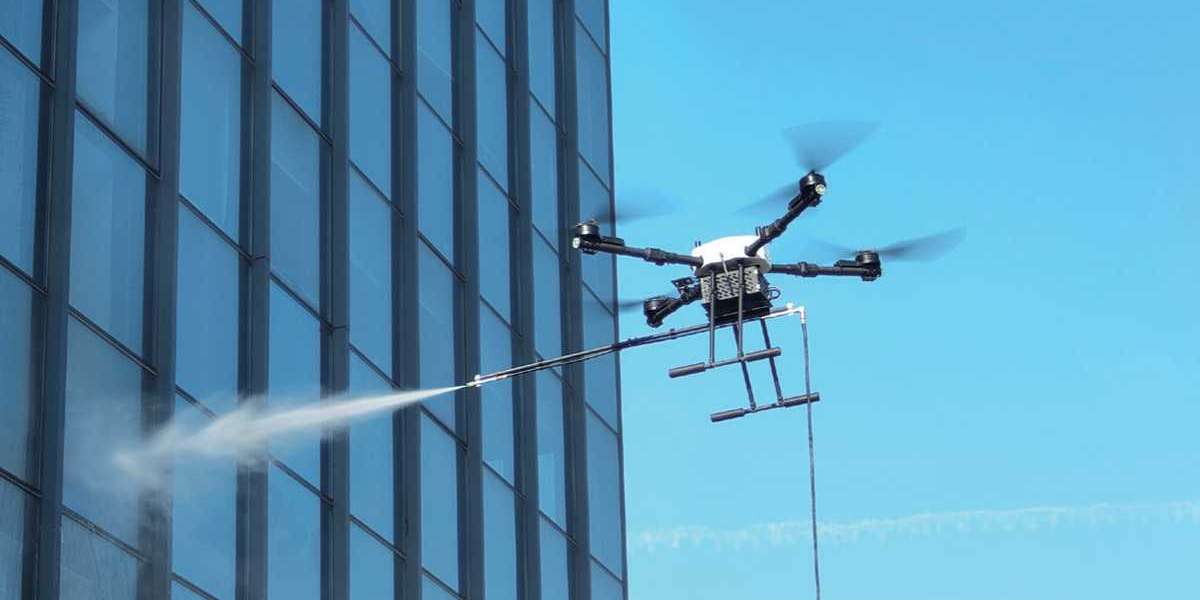

For decades, high rise window cleaning has relied on rope access, suspended platforms, and building maintenance units. While these methods remain widely used, they all have one thing in common—people are required to work at height.
The emergence of facade cleaning drones has changed that equation. Instead of placing technicians hundreds of meters above the ground, operators remain safely on the ground while the drone performs the cleaning.
Despite the growing adoption of this technology, many building owners still have practical concerns. What happens if the drone loses power? Is spraying water against a glass curtain wall safe? Can wind affect flight stability? Could the drone scratch the glass? And are cleaning drones suitable for every type of high-rise building?
These questions deserve straightforward answers. Understanding how industrial cleaning drones are designed and operated helps explain why they are becoming an increasingly trusted option for exterior building maintenance.
Why Safety Has Become the Primary Concern in High-Rise Window Cleaning
Cleaning the exterior of tall buildings has never been a low-risk task. Whether technicians are suspended by ropes or working from a gondola, every project involves exposure to height, changing weather, and complex building geometry.
As buildings continue to grow taller and façade designs become more sophisticated, reducing human exposure has become a priority across the facility management industry.
Drone cleaning does not eliminate every operational risk, but it shifts the operator away from the building façade. Instead of placing workers outside the building, the aircraft performs the task while the crew supervises the operation from the ground.
This change alone represents one of the biggest differences between traditional and drone-assisted window cleaning methods.
Can a Cleaning Drone Fall?

It is probably the first question every building owner asks—and understandably so.
Like any aircraft, a cleaning drone cannot be described as incapable of failure. However, professional systems are engineered with multiple layers of protection to minimize operational risks rather than relying on a single component.
Industrial cleaning drones continuously monitor flight attitude, positioning, motor performance, communication signals, and power status throughout the operation. If abnormal conditions are detected, the flight control system can respond immediately by stabilizing the aircraft or initiating a controlled return procedure.
Many commercial cleaning drones are also connected to the ground through water hoses and power cables. Besides providing continuous water and electricity, this configuration allows the aircraft to operate for extended periods without relying entirely on onboard batteries, making long-duration façade cleaning more practical.
Equally important is the human factor. Professional operators inspect the aircraft, cleaning equipment, hoses, weather conditions, and the surrounding work area before each mission. Safe operation depends as much on preparation as it does on technology.
Is Spraying Water Against High-Rise Buildings Safe?
When people hear the phrase "drone cleaning," they often imagine extremely high-pressure water being directed at building windows. In reality, the cleaning process is much more controlled.
Professional façade cleaning systems adjust water pressure according to the building material being cleaned. Glass curtain walls, aluminum panels, coated metal surfaces, and stone cladding all have different cleaning requirements, and the water delivery system is selected accordingly.
Rather than relying on force alone, many systems combine purified water with an appropriate flow rate to remove dust, airborne pollutants, pollen, and light surface contamination. This approach reduces the likelihood of leaving mineral deposits while minimizing unnecessary stress on façade materials.
The condition of the building itself also plays a role. Damaged seals, cracked glazing, or deteriorated façade components should always be repaired before any exterior cleaning is performed, regardless of whether the work is completed by technicians or drones.
What Happens When Wind Conditions Change?
Wind is one of the most important environmental factors affecting every form of aerial operation.
Tall buildings naturally generate complex airflow patterns. As wind travels around corners and across rooflines, turbulence can develop even when conditions appear calm at street level. For this reason, professional drone cleaning projects begin with an assessment of both weather forecasts and site-specific wind conditions.
Modern industrial drones use multiple positioning sensors and intelligent flight control systems to maintain a stable distance from the building surface. These systems continuously make small adjustments to compensate for normal airflow changes during operation.
However, no responsible contractor treats drone cleaning as an all-weather solution. If wind speed or gusts exceed the manufacturer's recommended operating limits, cleaning work is postponed. Knowing when not to fly is an essential part of safe drone operation.
Can Drone Cleaning Damage Glass?
Another common misconception is that the drone itself comes into contact with the window.
In most professional cleaning operations, the aircraft maintains a controlled working distance from the façade while directing water toward the surface. The goal is to clean the glass without allowing unnecessary contact between the aircraft and the building.
Some cleaning systems incorporate soft brushes for specific applications, but these are designed for delicate exterior surfaces rather than aggressive mechanical scrubbing.
Compared with traditional manual cleaning, where worn brushes or contaminated tools may occasionally introduce scratches, drone-based cleaning reduces direct physical contact with the glass during routine maintenance.
As with any cleaning method, operator experience remains important. Buildings with damaged glazing, decorative architectural elements, or fragile façade components require careful planning before work begins.
Which Buildings Are Suitable for Drone Window Cleaning?
One of the strengths of drone technology is that it is not defined solely by building height.
Instead, suitability depends on the overall characteristics of the project.
Buildings with large glass curtain walls are often ideal candidates because drones can move efficiently across broad vertical surfaces without requiring extensive rigging or suspended platforms.
Hotels, office towers, shopping malls, airports, exhibition centers, hospitals, and residential developments are among the properties increasingly exploring drone-assisted façade maintenance.
Projects involving highly detailed façade repairs, sealant replacement, or structural maintenance may still require rope access or suspended platforms. In many cases, drones are used alongside traditional access methods rather than replacing them entirely.
How Drone Cleaning Changes the Safety Equation
The most significant safety advantage of drone window cleaning is not that it removes every risk—it is that it changes where the risk exists.
Traditional methods place technicians on ropes, platforms, or mechanical access systems outside the building. Drone cleaning allows operators to remain on the ground while supervising the aircraft from a controlled work area.
This reduces exposure to falls, simplifies site setup, and limits the amount of heavy equipment required around the building perimeter.
For building owners, the result is often a safer working environment, less disruption to daily operations, and a more efficient approach to routine facade cleaning.
Looking Beyond the Technology
Drone window cleaning should not be viewed simply as a replacement for ropes or gondolas. It is another tool that expands the range of solutions available for maintaining modern buildings.
The safest cleaning method is always the one that matches the building, the environmental conditions, and the maintenance objective.
For routine cleaning of glass curtain walls, drone technology offers a practical way to reduce work at height while maintaining cleaning quality. As flight systems, positioning technology, and cleaning equipment continue to evolve, drones are likely to become an increasingly common part of building maintenance programs—not because they replace every traditional method, but because they improve safety where it matters most.