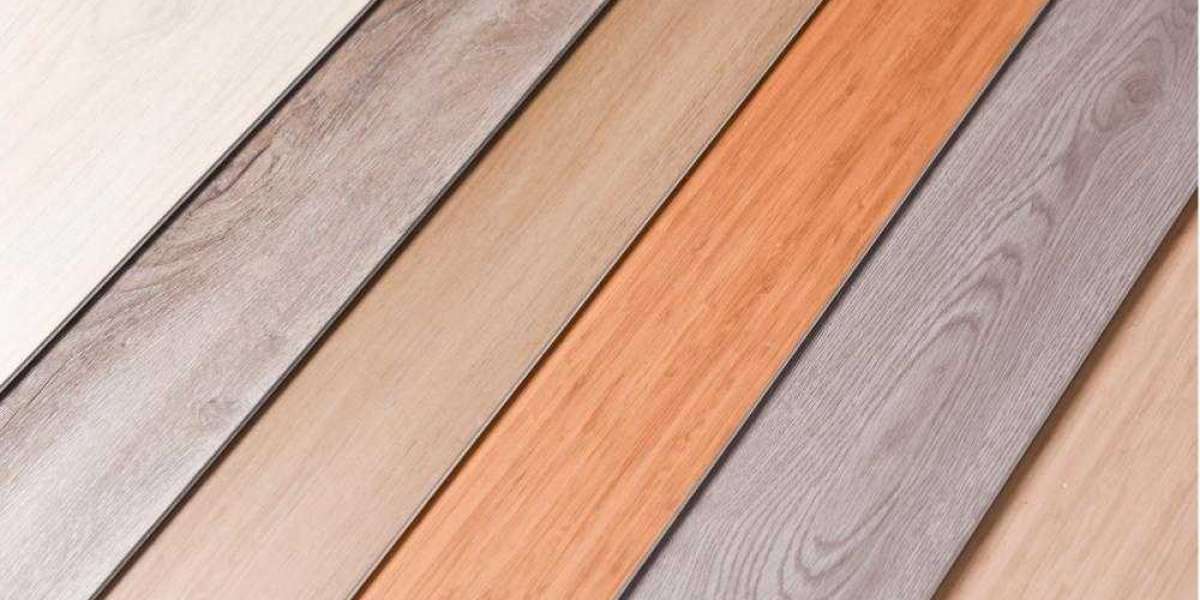

SPC — short for Stone Plastic Composite — has quickly become one of the most requested flooring categories in both residential and commercial renovation projects, but many buyers still aren't entirely sure what sets it apart from laminate or standard vinyl. At its core, SPC flooring is made by combining natural limestone powder, polyvinyl chloride (PVC), and stabilizers, then compressing the mixture under high temperature and high pressure into a dense, rigid core.
Why the composite structure matters
That stone-and-plastic combination is what gives SPC flooring its defining characteristics: the density and stability of stone, paired with the flexibility and workability of plastic. The result is a floor that resists warping, expansion, and moisture damage far better than traditional wood-based flooring options, while still being easy to cut and install on-site.
Layer by layer
A typical SPC floor is built from several functional layers: a UV-cured top coat for scratch and stain resistance, a wear layer that determines how the floor holds up to foot traffic, a printed decorative layer (which can replicate marble, wood grain, or stone patterns), the rigid SPC core itself, and a base layer for stability and, in some products, acoustic support.
Formaldehyde-free and moisture-resistant by design
Because SPC flooring doesn't rely on wood fibers or organic adhesives the way laminate does, it's inherently formaldehyde-free — an increasingly important selling point as buyers and regulators pay closer attention to indoor air quality. Combined with its waterproof core, this makes SPC flooring a practical option for kitchens, bathrooms, and other moisture-prone areas where traditional laminate flooring would eventually fail.
Where SPC flooring performs best
SPC flooring is now used across a wide range of settings — residential homes, hotels, offices, retail spaces, and public buildings — largely because it holds up to heavy foot traffic while requiring minimal ongoing maintenance. Its rigid core also allows for straightforward click-lock installation in many product lines, reducing labor time compared to adhesive-based flooring systems.
A category built for scale
For distributors and contractors sourcing flooring at volume, SPC's manufacturing consistency is a major advantage: because the core composition and pressing process are standardized, buyers can expect predictable performance and appearance across large orders — a critical factor for commercial projects spanning multiple rooms or floors.
Chongqing Huigong has manufactured SPC flooring since 2012, with an annual production capacity of 5 million square meters across multiple thicknesses, colors, and finishes. Explore the full SPC flooring to find the right specification for your next project.










