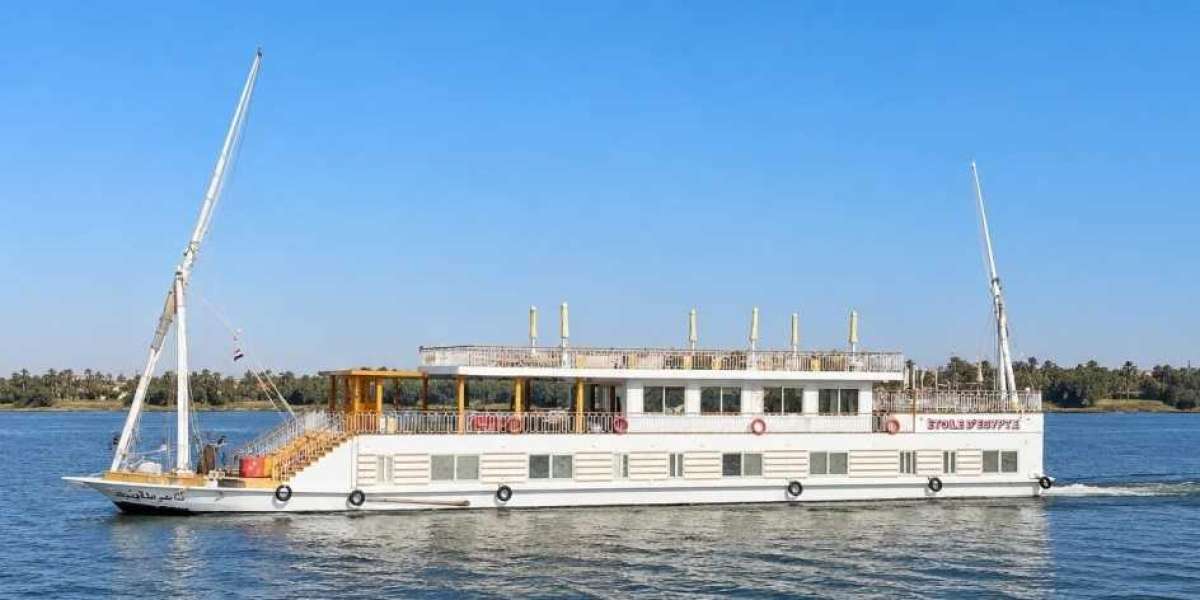

Long before modern roads and railways connected the country, sailing boats carried people and goods between riverside towns. A dahabiya cruise allows today’s travellers to experience part of this historic relationship while visiting the temples and communities of Upper Egypt.
A traditional form of Nile travel
A dahabiya is a shallow-bottomed sailing vessel recognised by its large sails and elegant shape. These boats became particularly popular among travellers during the nineteenth century, when journeys along the Nile could last several weeks or months.
Modern dahabiyas preserve the traditional appearance while providing comfortable accommodation. Cabins may include private bathrooms, air conditioning, windows, and storage. Most vessels also have an open deck where passengers can eat, relax, read, and watch the scenery.
The number of cabins is generally limited, creating a quieter atmosphere than a conventional cruise ship. Facilities vary between boats, so travellers should review recent photographs and confirm the exact cabin category before booking.
Travelling between Luxor and Aswan
Most present-day itineraries operate between Luxor and Aswan, with departures offered in both directions. The route passes through a region known for ancient temples, archaeological remains, agricultural landscapes, villages, and Nile islands.
Guided excursions may include famous attractions and smaller sites located between the two cities. A typical day can combine a morning visit with several hours of sailing, followed by an evening at a quiet mooring place.
Wind and river conditions may affect the schedule. A support vessel can sometimes assist when the wind is limited, but navigation requirements, local permissions, and operational issues may still change the order or timing of visits. Passengers should remain flexible while confirming any sites that are especially important to them.
Experiencing life beside the river
The smaller size of a dahabiya allows passengers to stay closer to the Nile’s daily activity. From the deck, they may see farmers working in fields, fishermen crossing the river, children returning from school, and local boats moving between communities.
Some itineraries include village walks, markets, islands, or meals near the riverbank. Travellers should approach these visits respectfully and ask permission before photographing residents. Appropriate clothing and consideration for local customs are important when entering communities or religious places.
Choosing the right journey
Cruise length, sailing direction, cabin type, included excursions, and group size should all be compared. Shared departures suit travellers who are comfortable joining a small group, while private charters provide exclusive use of the boat for a family or group.
Travellers can examine available routes, durations, departure choices, and accommodation through WOW Egypt Tours Dahabiya cruises. A written quotation should confirm the boat, dates, meals, transfers, entrance fees, guiding services, optional activities, and cancellation terms.
Sailing by dahabiya connects Egypt’s historic sites with the river that helped shape them. The journey is not limited to moving between Luxor and Aswan. Time on deck, village views, changing landscapes, and quiet moorings allow passengers to understand why the Nile remains central to life in Egypt.









