
Introduction
Somewhere in the last decade, moringa started showing up on wellness blogs and supplement shelves with a brand-new name and a brand-new price tag. Except for most Gujarati households, this wasn't a discovery. It was drumstick — saragvo — the same tree whose pods have gone into sambar and dal for generations, whose leaves grandmothers cooked into a simple sabzi long before anyone called it a superfood.
What's actually changed isn't the plant. It's the format. Drumstick leaves, dried and ground into a fine powder, turn an ingredient that used to require a fresh tree in the backyard or a trip to a specific vegetable vendor into something you can keep in a jar and use daily, in a spoonful stirred into water, dal, or roti dough — no seasonal dependency, no wilted leaves going bad in the fridge within two days.
This guide covers what moringa actually offers nutritionally, why the powder form makes more practical sense than fresh leaves for most households, how to actually use it day to day, and what to check for quality when buying it online.
What Is Drumstick Powder, Exactly?
Drumstick powder is made from the leaves of the moringa tree (Moringa oleifera), known in Gujarati as saragvo — the same tree that produces the long, ridged drumstick pods used in sambar and dal. While the pods get most of the attention in everyday cooking, it's actually the leaves that carry the most concentrated nutritional value, and drying and grinding them into a fine powder is simply a practical way to preserve and use that nutrition without needing a constant fresh supply.
The leaves are harvested, washed, dried at low temperature to preserve nutrients, and ground into a fine, deep green powder. Done properly, this process retains most of the leaf's nutritional profile while giving it a shelf life measured in months rather than the day or two you'd get from fresh moringa leaves.
Why Moringa's Reputation Is Genuinely Earned
Moringa's "superfood" label gets thrown around loosely for a lot of products, but in this case, the nutritional profile actually backs it up. Research summarized by institutions studying the plant, including material referenced by the Food and Agriculture Organization on moringa's nutritional value in food security contexts, consistently points to an unusually dense nutrient profile for a leafy plant.
An Exceptional Source of Iron
Moringa leaf powder is notably rich in iron, making it a genuinely useful addition to the diet for anyone managing mild iron deficiency, alongside a balanced diet and medical guidance where needed.
High in Calcium
Gram for gram, moringa powder contains a significant amount of calcium, relevant for bone health, particularly for those who may not get enough from dairy alone.
Rich in Vitamin A
Moringa leaves are a strong source of vitamin A, which supports eye health, immune function, and skin health.
A Good Source of Protein for a Plant-Based Food
Unusually for a leafy vegetable, moringa contains a meaningful amount of protein relative to its weight, along with a fairly complete amino acid profile — a genuinely useful detail for households eating more plant-based meals.
Loaded With Antioxidants
Moringa leaves contain a range of antioxidant compounds, including quercetin and chlorogenic acid, which help the body manage everyday oxidative stress.
Traditionally Associated With Blood Sugar Support
Moringa has a long history of traditional use in supporting healthy blood sugar levels, and some research has explored this association further. As always, this reflects traditional use and preliminary research rather than a replacement for medical treatment — anyone managing diabetes should discuss moringa with their doctor before relying on it as part of their management plan.
Anti-Inflammatory Properties
Compounds found in moringa leaves have been studied for their potential anti-inflammatory effects, contributing to its broader traditional reputation as a wellness-supporting food.
(This is general nutritional and traditional-use information, not medical advice. Moringa is a food, not a drug, and shouldn't replace prescribed treatment for any condition. Speak with a doctor about how it fits your specific health needs, especially if you're pregnant, nursing, or on medication, since moringa can interact with certain drugs.)
Why Powder Instead of Fresh Leaves?
Fresh moringa leaves are genuinely nutritious, but they come with real practical friction. The tree isn't grown in every household anymore the way it once commonly was, fresh leaves wilt and lose nutritional value within a day or two of being picked, and using them regularly means either growing your own tree or finding a reliable local vendor — neither of which is realistic for most urban households in Rajkot, Ahmedabad or Surat today.
Drumstick powder solves this cleanly. Properly dried and ground, it retains the majority of the leaf's nutrient content in a shelf-stable form that keeps for months, measured out easily by the spoon, and requires zero preparation — no washing, no plucking leaves off stems, no cooking down a fresh bunch that might be more than you need for one meal.
The trade-off is minor: some heat-sensitive nutrients degrade slightly during the drying process compared to eating leaves completely fresh and raw. For nearly every practical use — daily supplementation, cooking, baking — this difference is negligible against the convenience gained.
How to Use Drumstick Powder Daily
Moringa Water
The simplest option. Stir half a teaspoon to one teaspoon of drumstick powder into a glass of warm water, add a squeeze of lime if you like, and drink first thing in the morning. This is the most common way health-conscious households across Gujarat are incorporating it into a daily routine.
Added to Dal
Stir a small spoon of drumstick powder into dal just before serving, once it's off the heat. The mild, slightly earthy flavour blends in easily without changing the dish's character much, while adding a genuine nutritional boost to an already staple meal.
Mixed Into Roti or Thepla Dough
Knead a spoon or two of drumstick powder directly into your regular roti or thepla dough. The green tint is noticeable but not unpleasant, and it's a low-effort way to add moringa's nutrients into a food that's already part of daily meals.
Moringa Smoothie
Blend a small spoon of drumstick powder with a banana, curd or milk, and a touch of honey for a nutrient-dense smoothie. The flavour is mild enough that it doesn't overwhelm the other ingredients if used in moderate amounts.
Sprinkled Over Khichdi or Vegetables
A light dusting of drumstick powder over a finished bowl of khichdi or a plate of cooked vegetables is an easy way to add it into a meal without needing a dedicated recipe.
Moringa Tea
Steep a small spoon of drumstick powder in hot water for a few minutes, strain if needed, and drink as a simple herbal tea — sometimes with a touch of honey or lemon for flavour.
Baked Into Snacks
Some households mix drumstick powder into muthiya or handvo batter, adding a nutritional boost to snacks that are already part of the regular Gujarati kitchen rotation.
How Much Should You Take Daily?
There's no single official dosage, but a commonly followed guideline is around half a teaspoon to one teaspoon per day for general wellness use, gradually building up from a smaller amount if you're new to it, since introducing any new concentrated food too quickly can occasionally cause mild digestive discomfort. It's genuinely best used as a consistent, small daily addition rather than in large occasional amounts. As always, consult a doctor for guidance specific to your health situation, particularly for children, during pregnancy, or alongside any existing medication.
What to Look for When Buying Drumstick Powder
Check the colour. Good quality moringa powder should be a vibrant, deep green. A dull, brownish colour often indicates the leaves were dried at too high a temperature or stored improperly, both of which degrade nutrient content.
Ask about the drying process. Low-temperature drying preserves more of the leaf's nutritional value than high-heat drying, which can destroy heat-sensitive vitamins.
Check the ingredient list. It should read only drumstick (moringa) leaf, with nothing else added — no fillers, no anti-caking agents unless clearly and safely declared.
Look for certification. FSSAI licensing is the baseline requirement for any food supplement sold in India.
Check the smell. Good moringa powder has a mild, grassy, slightly earthy aroma. A musty or stale smell suggests the powder is old or was stored poorly.
Confirm the packaging is airtight. Moringa powder is sensitive to moisture and light, both of which degrade its nutrient content over time, so proper sealed packaging matters more than it might for other products.
Storing Drumstick Powder
Store the powder in a cool, dry place, away from direct sunlight, ideally in an airtight container if you've opened the original packaging. Kept properly, drumstick powder holds its quality for roughly 12 months from the date of packaging.
Avoid storing it near sources of heat or moisture, such as directly above a stove, since both accelerate the loss of nutritional value and can affect the powder's texture and shelf life.
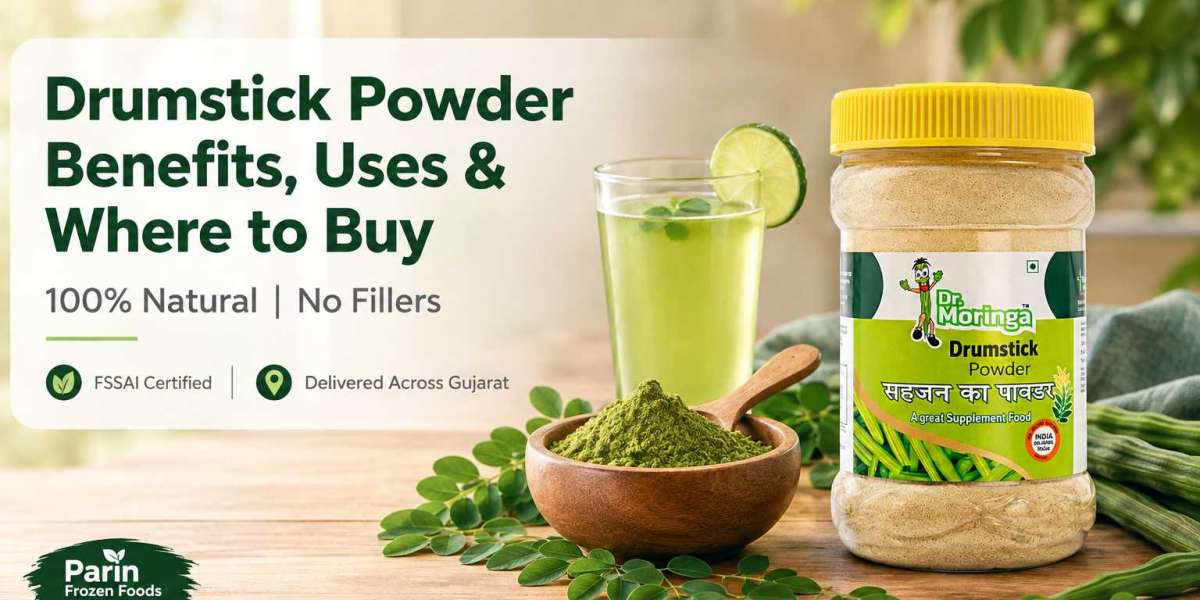
Drumstick Powder — Available at Parin Frozen Foods
At Parin Frozen Foods, our drumstick powder is made from quality-checked moringa leaves, dried at a controlled low temperature to preserve their natural colour and nutrient content, then finely ground and packed to lock in freshness.
Product: Drumstick Powder (100 GM.) What's in it: 100% natural drumstick (moringa) leaf powder, no fillers or additives Certification: FSSAI licensed Delivery: All cities across Gujarat and metro cities in India
Whether you're adding a daily spoon to your morning water in Rajkot, or you're a health-food store or wellness brand in Ahmedabad or Surat looking for a consistent, quality-checked moringa supply, we deliver straight to your door.
For bulk orders — health-food stores, wellness brands, Ayurvedic practitioners — call us at +91 96384 67400 or +91 96384 67800, or email parinfrozenfoods@gmail.com for pricing on larger quantities.
Explore our other natural products too, including Guava Pulp, Custard Apple Pulp, and Kesar Mango Pulp — all processed and packed at our facility in Rajkot, Gujarat.
Frequently Asked Questions
Is drumstick powder the same as moringa powder? Yes, drumstick and moringa refer to the same tree (Moringa oleifera) — "drumstick" is the common name used in India, largely because of its long pods, while "moringa" is the name more commonly used internationally.
How is drumstick powder different from drumstick pods used in sambar? The pods and leaves come from the same tree but are used differently. Powder is made from the leaves, which are more nutrient-dense than the pods, and is used as a daily supplement rather than a cooking vegetable.
Can I take drumstick powder every day? Many people do, typically around half a teaspoon to one teaspoon daily, though it's best to start with a smaller amount and consult a doctor for guidance specific to your health needs.
Does drumstick powder have any side effects? Moringa is generally well tolerated in food-level amounts, though very large quantities can occasionally cause mild digestive discomfort. It may also interact with certain medications, so check with your doctor if you're on regular medication.
How long does drumstick powder last once opened? Around 12 months from packaging if stored in a cool, dry, airtight container away from direct sunlight.
Is drumstick powder safe during pregnancy? This should be discussed directly with your doctor, as guidance can vary depending on individual health circumstances.
Do you deliver drumstick powder outside Gujarat? We deliver across all cities in Gujarat and to metro cities in India. Contact us to confirm delivery to your specific location.
Can I order drumstick powder in bulk for my health-food store? Yes. We supply bulk quantities to health-food stores, wellness brands and Ayurvedic practitioners across Gujarat. Call +91 96384 67400 for wholesale pricing.