
The transition from 2-layer lamination to 3-layer lamination is one of the most significant leaps a flexible packaging converter can make. It unlocks high-barrier structures like PET/AL/PE and BOPP/NY/CPP, opening doors to premium markets in food, pharmaceutical, and industrial packaging. But it also introduces new complexities: three webs running simultaneously, three tension zones to balance, and exponentially more failure modes. This article combines Sinstar's deep technical expertise—drawn from their 3-layer troubleshooting guide and their PET/PE vs. BOPP/PE analysis—to provide a comprehensive roadmap for mastering triplex production on a solventless laminating machine.
Reading the Fracture: Your First Diagnostic Step
When a web break occurs on a triplex solventless laminating machine, the most valuable evidence is the fracture morphology itself. Before adjusting any machine parameters, operators should analyze the physical characteristics of the broken film edge:
Straight and Clean Edge: This profile indicates a mechanically cut or inherent slitting defect. A sharp object—such as a dried adhesive crystal or a nicked guide roller—scratched the moving web, setting up a stress concentration point that snapped under normal running tension.
Jagged or Serrated Edge: This shape is a sure sign of excessive web tension. The tensile force applied to the particular layer exceeded the mechanical yielding limit of the substrate, causing a violent, irregular tear.
Neckdown or Stretched Edge: This appearance indicates thermal damage or localized overheating. Thermally sensitive substrates like PE or PP lose mechanical modulus when subjected to higher temperatures. The film stretches, thins, and breaks even under a normal tension profile.
By simply examining the broken edge, an experienced operator can immediately narrow down the root cause to mechanical, tension-related, or thermal—saving hours of trial-and-error adjustment.
Equipment-Level Causes of Web Breaks
Multilayer solventless lamination demands precise mechanical synchrony. Hardware instability in any of the following subsystems will induce web breaks:
1. Tension Control System Mismatch
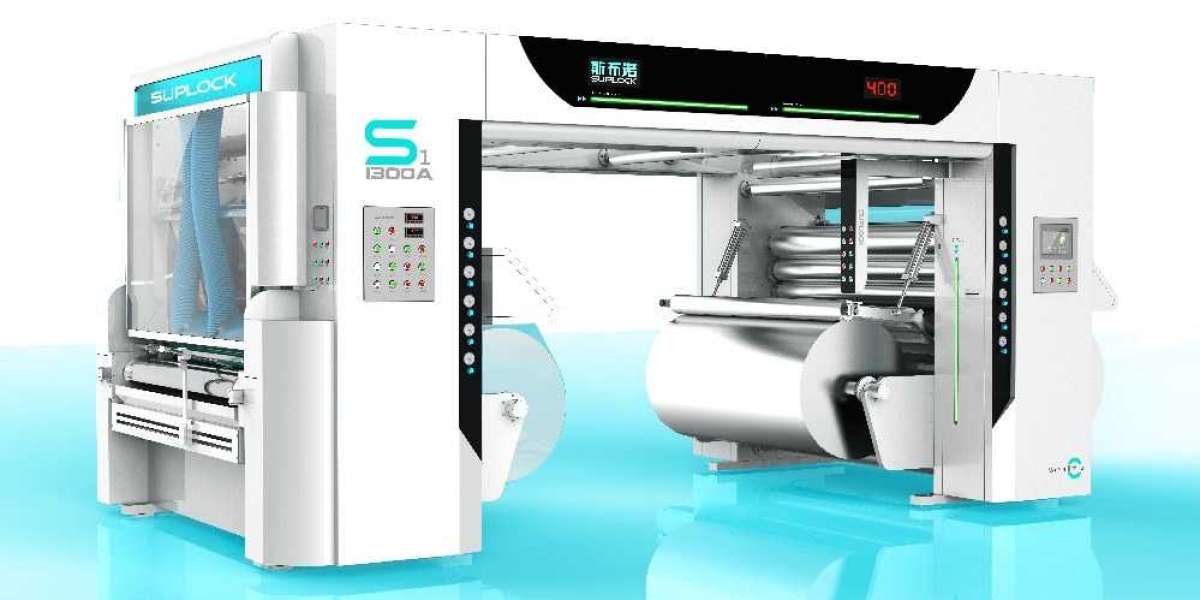
A triplex solventless laminator relies on multiple closed-loop tension zones. If a load cell drifts or a pneumatic brake suffers from internal friction (stiction), the tension feedback loop lags. This creates sudden tension spikes during acceleration or deceleration, snapping the thinnest film layer. Modern machines like Sinstar's TRI-1300A address this with servo-driven tension control that eliminates stiction.
2. EPC/LPC Guiding System Over-Correction
Edge Position Control (EPC) systems maintain web alignment. If sensor sensitivity is set too high or the hydraulic/servo actuator responds with excessive force, the guiding roller swings violently. This rapid lateral movement creates uneven tension distribution across the web width, tearing the tight side of the film. Proper tuning is essential—sensitivity should be high enough to correct drift, but not so high that it induces oscillation.
3. Line Speed Asynchrony
The primary driving roller, coating rollers, and individual unwinding stations must achieve precise linear speed synchronization. If the feed rate of a specific layer falls below the linear throughput speed of the main lamination nip roller, the nip roller pulls the film faster than it is supplied, creating a mechanical tug-of-war that terminates in a web break. On the TRI-1300A, servo synchronization across all stations prevents this failure mode.
Process-Level Causes: The T-V-P Triangle
Operational configurations must match the specific physical properties of the laminated films and the solventless chemical adhesive. The three critical variables are Temperature, Velocity, and Pressure (T-V-P):
Incorrect Temperature Matching: Solventless lamination requires heating the steel laminating roller to lower adhesive viscosity and promote initial tack. However, if the roller temperature is set too high for a thermal-sensitive material like a 30μm PE film, heat conducts through the web, reducing its tensile strength. If machine velocity is decreased without a corresponding reduction in roller temperature, the extended dwell time under heat results in thermal breakage.
Adhesive Viscosity and the "Sticky Roller" Effect: Solventless adhesives are highly dependent on temperature to maintain correct running viscosity (typically 2,000–3,000 mPa·s at the coating head). If the mixing ratio shifts or temperature drops, viscosity increases rapidly. High tackiness prevents the coated film from releasing smoothly from transfer rollers, causing it to wrap around the roller instead of advancing to the lamination point.
Raw Material Slitting Defects: Variations in incoming film roll quality represent a major process hazard. Microscopic edge tears or cracks generated during slitting act as crack propagation points under normal winding and unwinding tensions.
Mechanical Degradation: The Silent Productivity Killer
Even with perfect initial setup, mechanical degradation inside the machine introduces parasitic forces that disrupt film transport over time:
Seized Guide Roller Bearings
Guide rollers must rotate freely with minimal rolling resistance. If a bearing accumulates dust or loses lubrication, it becomes a "dead roller." The moving film slides over a stationary surface, creating massive frictional drag that alters the downstream tension zone and strains the material to its breaking point. Regular bearing inspection and lubrication is non-negotiable.
Adhesive Residue Build-Up
Solventless polyurethane adhesive cures into a tough, solid elastomer. If operators fail to clean roller edges at the end of a shift, dried adhesive blocks accumulate on steel or rubber rollers. As the film passes over these hard protrusions, it experiences high localized point pressure, puncturing or weakening the film. Mandatory protocol: Rollers must be cleaned at the end of every single shift (every 8–12 hours) and immediately following any unplanned production shutdown.
Static Electricity Accumulation
Plastic films are highly insulating and generate substantial electrostatic charges via friction. Without functional static eliminators, film layers cling to metal rollers or to each other, creating jerky, non-uniform release from the web path and causing fluctuating tension spikes. Ensuring static eliminators are operational is a simple but critical preventive measure.
Substrate Selection: PET/PE vs. BOPP/PE in the Context of 3-Layer
While the discussion of PET vs. BOPP often centers on 2-layer lamination, the principles extend directly into triplex production. When selecting the outer layer of a 3-layer structure, the choice between PET and BOPP carries profound implications:
Barrier Properties
PET offers excellent oxygen barrier (low OTR), making it the superior choice for preventing rancidity in fatty foods. BOPP offers high moisture barrier (low WVTR) but inferior oxygen barrier. For triplex structures requiring both, a metallized PET film as the middle layer is preferred.
Thermal Stability
PET's melting point (~260°C) allows it to act as a heat-resistant shield, enabling the inner PE layer to melt and seal without the outer layer shrinking. BOPP melts at ~165°C, requiring much tighter temperature control on the packaging line to avoid "burn-through" or thermal shrinkage. In a triplex machine, this thermal gap means PET-based structures can tolerate more aggressive processing conditions.
Dimensional Stability and Tension Behavior
PET is dimensionally stable and does not stretch significantly under standard operating tensions, making it the preferred choice for high-speed 3-layer lamination where consistency is the priority. BOPP, with its higher modulus of elasticity, stretches easily under tension. If rewinding tension is too high, BOPP stretches and then "rebounds" after tension release, leading to curl—a defect that renders the film unusable on automatic pouch-making machines.
Corona Treatment Retention
Both PET and BOPP require corona treatment to achieve surface energy above 38–40 dynes/cm for adequate adhesive bonding. However, BOPP loses its corona treatment faster during storage. Using "stale" BOPP film results in bond strength dropping below the industrial standard of 1.5 N/15mm, leading to delamination. In triplex production, where three bonds must all succeed, substrate freshness is paramount.
Slip Agent Migration
In 2-layer lamination, the migration of slip agents (erucamide or oleamide) from the PE layer through the adhesive is a known issue. Because BOPP is chemically more similar to PE than PET, slip agent migration occurs more frequently in BOPP/PE structures, potentially increasing the coefficient of friction and causing the film to "drag" or "stick" on the packaging machine's forming collar. In triplex structures, this phenomenon can affect interlayer adhesion if not properly managed through adhesive selection and curing protocols.
Preventive Maintenance Matrix for 3-Layer Production
To transition from reactive troubleshooting to structured prevention, manufacturers must implement a rigorous maintenance protocol. Key actions include:
Frequency | Action |
Every 8–12 hours (end of shift) | Clean all roller surfaces; remove adhesive residue |
Every 8–12 hours | Inspect guide roller bearings for free rotation |
Daily | Verify EPC sensor calibration and actuator response |
Weekly | Check load cell accuracy in tension zones |
Monthly | Test static eliminator functionality across web path |
Per roll change | Inspect incoming film for slitting defects |
Per roll change | Verify corona treatment level (≥38–40 dynes/cm) |
Per adhesive batch | Confirm mix ratio and viscosity (2,000–3,000 mPa·s) |
The PE Layer Breakage Question, Answered
Returning to the most frequently asked question in 3-layer lamination: "Why does the PE layer always break?"
The answer is excessive thermal exposure from the heated lamination steel roller. PET and aluminum foil have high thermal resistance thresholds; PE does not. When the steel roller temperature exceeds PE's thermal tolerance, heat rapidly transfers through the thin PE web, causing it to soften, lose tensile strength, and undergo neckdown. Under normal running tension, this softened zone cannot support the mechanical load and snaps.
Corrective actions:
- Lower the steel roller temperature to the minimum required for adhesive activation
- Increase machine speed to reduce heat dwell time on the PE layer
- Ensure proper adhesive viscosity (2,000–3,000 mPa·s) to prevent sticky roller effects
- Utilize a triplex solventless laminating machine with short web routing (like the TRI-1300A) to minimize thermal exposure
- Monitor the fracture morphology—if neckdown is present, thermal management is the issue; if jagged, tension is the issue
Integrating Insights: From 2-Layer to 3-Layer Excellence
The journey from a 2-layer solventless laminating machine like the WRJ i9 to a triplex solventless laminating machine like the TRI-1300A is not merely an equipment upgrade—it is a mastery of new physical principles. The lessons learned in duplex production (tension control, substrate selection, adhesive management) form the foundation, but triplex production adds the dimensions of thermal management across multiple layers, synchronized multi-zone tension, and the elimination of intermediate curing.
Converters who invest in understanding these principles—rather than simply purchasing a machine—will achieve the highest yields, the lowest defect rates, and the greatest return on their solventless investment. And with Sinstar's combination of nearly 20 years of focused RD, 2,680+ installations worldwide, and built-in IoT remote diagnostics, that knowledge is supported by engineering expertise that transcends geographical boundaries.
Whether you are running PET/PE on a WRJ i9, PET/AL/PE on a TRI-1300A, or exploring the nuances of BOPP vs. PET for your next premium structure, the underlying truths remain constant: respect the physics of the web, maintain your equipment rigorously, and choose your solventless laminator partner wisely. In the rapidly evolving landscape of flexible packaging, those who master 3-layer lamination today will define the premium packaging standards of tomorrow.