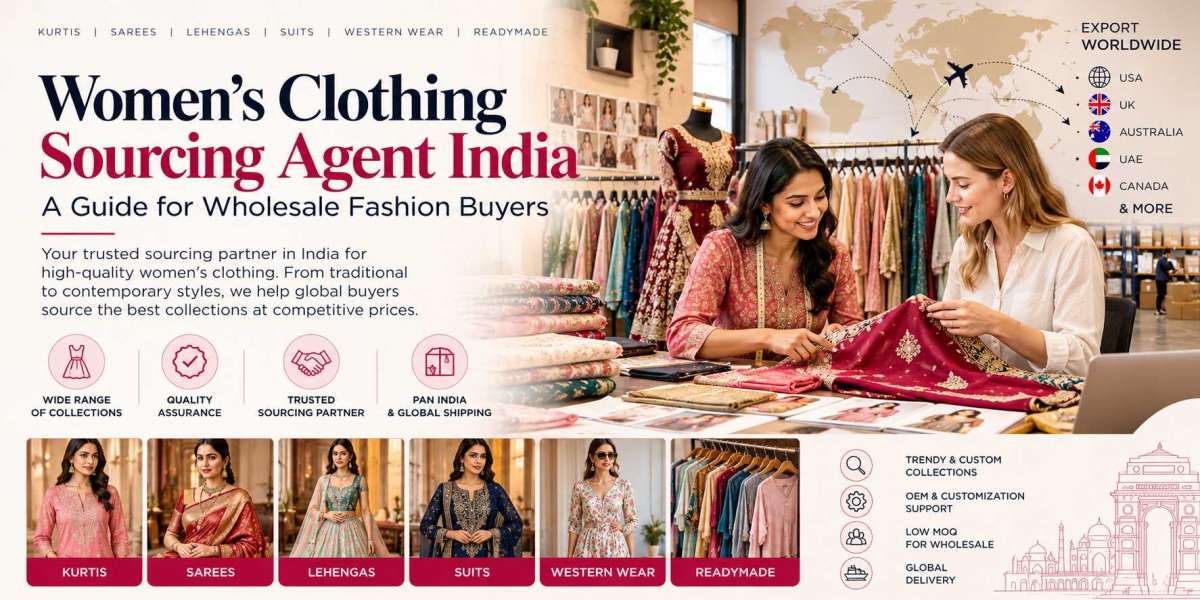

For businesses purchasing from India for the first time, the sourcing process can involve more than simply finding a product online. Buyers may need to compare collections, understand fabrics and measurements, review supplier terms, arrange samples, and coordinate international logistics. A structured sourcing approach can make these activities easier to manage.
What Does a Women's Clothing Sourcing Agent Do?
A clothing sourcing agent generally helps buyers identify suitable products and suppliers based on their requirements. Depending on the arrangement, sourcing support may include product research, supplier communication, sample coordination, quality inspection, price discussions, production follow-up, and shipping coordination.
The exact services differ between sourcing companies, so buyers should establish responsibilities before beginning a commercial relationship.
For retailers, this type of support can be particularly useful when they want to source multiple categories from India but do not have an established local purchasing team.
Why Source Women's Clothing From India?
India has a large textile and apparel ecosystem covering traditional clothing, contemporary fashion, fabrics, embroidery, printing, dyeing, and garment manufacturing.
This allows buyers to explore different product categories within the same sourcing market.
Common wholesale categories include:
Sarees
Kurtis
Salwar kameez
Lehenga
Dress materials
Gowns
Readymade dresses
Western wear
Tunics
Fashion tops
Indo-Western clothing
Fashion Export's current online catalogue includes several of these categories, including wholesale salwar kameez, kurtis, lehengas, dress materials, gowns, readymade dresses, western wear, and sarees.
Benefits of Organized Clothing Sourcing
A structured sourcing process can reduce the amount of time retailers spend searching through unrelated products.
Instead of purchasing immediately, buyers can first define their requirements, such as:
Product category:
Decide whether the business needs sarees, kurtis, suits, dresses, western wear, or a combination.
Target customer:
Consider age group, preferred styles, price range, and geographic market.
Quantity:
Estimate how many pieces are needed for the initial order.
Budget:
Set a target wholesale cost before comparing collections.
Delivery destination:
International buyers should consider shipping times, customs, duties, and local import requirements.
This preparation helps create a more focused sourcing brief.
Product Selection for Different Retail Businesses
Different businesses require different types of women's clothing.
Boutiques
Boutiques may prefer smaller collections with distinctive designs. They can combine everyday clothing with selected occasion wear to create a varied assortment.
Online Fashion Stores
Online stores often require products with clear photographs, descriptions, measurements, colours, and fabric information because customers cannot physically examine the garments before purchasing.
Wholesale Distributors
Distributors may focus more heavily on consistent availability, pricing, quantity, and product categories that can be supplied repeatedly.
International Retailers
International retailers need to consider destination-market preferences, sizing, seasonal requirements, packaging, shipping, and import regulations.
Fashion Export's international buyer page describes its platform as serving retailers, wholesalers, distributors, exporters, and other business buyers interested in wholesale women's clothing.
Understanding Fabrics and Garment Quality
Fabric is one of the most important elements to evaluate when sourcing clothing.
Different garments may use cotton, silk, georgette, rayon, organza, polyester blends, or other materials. The appropriate fabric depends on the garment category, climate, customer expectations, and retail price.
Buyers should review:
Fabric composition
Weight and thickness
Drape
Breathability
Colour consistency
Print quality
Embroidery
Stitching
Finishing
Washing and care requirements
A sample order can provide a better understanding of the actual product than photographs alone.
Importance of Size Information
Sizing can become particularly important when Indian clothing is sold internationally.
A buyer should not assume that an Indian M, L, or XL will have exactly the same measurements as the equivalent size in another country.
Before ordering, retailers should compare:
Bust measurement
Waist measurement
Hip measurement
Garment length
Sleeve length
Shoulder width
Bottom measurements where applicable
Fashion Export's product listings provide size information for individual collections, allowing buyers to review available sizing before purchasing.
Sampling Before Bulk Orders
Samples can help buyers evaluate a supplier before making a larger purchase.
A sample review can cover:
Fabric quality
Stitching
Colour accuracy
Embroidery or embellishment
Measurements
Product finishing
Packaging
Overall appearance
For online retailers, samples can also help with product photography and descriptions before launching a collection.
Quality Control During Sourcing
Quality control becomes increasingly important as order quantities increase.
A sourcing partner or buyer may check whether products match the approved sample or product specifications. Inspections can focus on stitching, stains, loose threads, incorrect sizing, missing embellishments, colour differences, and other visible issues.
The inspection process should be agreed upon before an order is placed. Buyers should also understand what happens if products do not meet the agreed specifications.
Fashion Export states on its website that it conducts quality checks on products before shipping.
Sourcing for International Markets
International buyers sourcing women's clothing from India should consider more than product selection.
Important areas include:
Import regulations
Customs procedures
Taxes and duties
Product labeling
Packaging requirements
Shipping documentation
Delivery timelines
Currency and payment arrangements
Requirements can differ significantly between countries, so buyers should verify the regulations applicable to their destination market.
Fashion Export states that it supplies international customers and lists destinations including the USA, UK, Canada, Australia, New Zealand, Malaysia, Singapore, UAE, Fiji, and Sri Lanka.
Why Surat Is Relevant to Clothing Sourcing
Surat is widely associated with India's textile and apparel trade, particularly fabrics, sarees, dress materials, synthetic textiles, and women's clothing.
Businesses sourcing from Surat can encounter a wide range of manufacturers, wholesalers, textile traders, and fashion suppliers.
Fashion Export states that its business has been involved in the Surat textile market for more than 10 years and operates its online wholesale platform from Surat, Gujarat.
For buyers who cannot travel to India, online catalogues and remote communication can provide an alternative way to research products and suppliers.
Choosing a Sourcing Partner
Before working with a sourcing agent or wholesale supplier, buyers should compare practical factors rather than focusing only on product prices.
Consider:
Product categories
Supplier experience
Minimum order quantities
Sample availability
Quality control procedures
Product documentation
Communication
Production timelines
Packaging
Shipping options
Payment methods
Return or cancellation policies
Clear communication is particularly important when orders involve multiple products or international delivery.
Online Sourcing Has Changed Wholesale Buying
Technology has made it easier for buyers to research Indian clothing without physically visiting wholesale markets.
Fashion businesses can browse online catalogues, compare products, review measurements, communicate with suppliers, and place orders remotely.
Fashion Export's FAQ states that customers can place orders online through its website or use offline ordering through WhatsApp or phone.
This type of purchasing process can be useful for small retailers that cannot maintain a dedicated sourcing team in India.
Building a Long-Term Sourcing Process
Successful wholesale sourcing is usually an ongoing process rather than a one-time transaction.
Once a buyer identifies suitable products, future orders can become more organized. Retailers can track which categories perform well, which sizes sell faster, which colours receive stronger customer interest, and which products require seasonal restocking.
Over time, this information can help businesses develop a more focused purchasing strategy.
For example, a retailer may discover that everyday kurtis generate consistent demand while heavily embellished garments perform mainly during festive periods. Such information can influence future buying decisions.
Conclusion
Working with a Women’s Clothing Sourcing Agent India can help retailers and wholesale buyers navigate India's diverse fashion supply chain. From product discovery and sampling to quality checks and order coordination, organized sourcing can simplify several stages of purchasing.
India offers a wide variety of women's clothing categories, including traditional Indian wear, contemporary fashion, western clothing, and occasion wear. Buyers can benefit from defining their requirements clearly, checking product quality, comparing measurements, and understanding international shipping and import requirements.
Fashion Export provides an online wholesale platform covering multiple women's fashion categories and serves business buyers in India and international markets.
For retailers building a long-term clothing business, the goal should be to establish a sourcing process that balances product variety, quality, pricing, availability, and customer demand.