
Optical systems operating around the 1.3 μm and 1.55 μm telecommunications bands require detectors that can efficiently convert incoming light into electrical signals. These wavelengths are widely used in optical communications and also appear in microwave photonics, laser measurement, and specialized sensing systems.
An InGaAs photodetector is a common choice for these applications because its semiconductor material can absorb light in the near-infrared wavelength range used by many fiber-optic systems. When combined with an appropriate device structure and high-frequency electrical packaging, InGaAs technology can support demanding optical-to-electrical conversion requirements.
Understanding the material's role helps engineers make better decisions when comparing detector products.
1. How InGaAs Converts Light into Electrical Signals
A photodetector operates through the photoelectric conversion process. When photons with sufficient energy are absorbed in the semiconductor, they generate electron-hole pairs. An electric field separates these charge carriers, producing a measurable photocurrent.
The material bandgap determines which photon energies can be absorbed effectively. InGaAs compositions are suitable for detecting near-infrared light, including wavelengths used in conventional fiber-optic communications.
However, the material alone does not determine the detector's performance. Carrier transit time, junction capacitance, optical coupling, and electrical parasitics all affect the achievable bandwidth.
This distinction is important: two detectors based on InGaAs may have significantly different frequency responses because their internal structures and packaging are different.
2. Why Bandwidth Depends on More Than the Semiconductor
A high speed photodetector must respond quickly enough to reproduce the modulation present in the incoming optical signal. Several physical and electrical factors influence this response.
First, carriers need time to travel through the active region. Shorter transit times can support faster operation, although device geometry and absorption efficiency must be balanced carefully.
Second, junction capacitance interacts with the surrounding circuit. Excessive capacitance can limit the electrical response, particularly when combined with resistance in the detector and its connections.
Third, package design matters. Bond wires, transmission lines, connectors, and impedance transitions can introduce parasitic effects that become increasingly significant at microwave frequencies.
Consequently, engineers should evaluate complete-module specifications rather than assuming that a particular semiconductor automatically provides a specific bandwidth.
3. Matching Wavelength and Responsivity
The detector's response range must cover the actual laser wavelength used in the system. For example, NEON's HSPD product information lists a wavelength range of 1000–1650 nm, with responsivity specifications varying according to wavelength and frequency-band configuration.
When comparing candidate devices, check responsivity at the intended operating wavelength rather than relying on a single value quoted for another wavelength.
Responsivity should also be considered alongside bandwidth. A detector may offer high sensitivity but insufficient frequency response, or broad bandwidth with lower responsivity. The right balance depends on the signal strength, required measurement accuracy, and available amplification.
For low-power optical signals, sensitivity may be a major concern. For strong, rapidly modulated signals, bandwidth, linearity, and saturation limits may be more important.
4. Applications Across Optical and Microwave Systems
InGaAs detectors can serve a variety of systems, including:
- Fiber-optic communication: Converting modulated optical signals into electrical data signals.
- Microwave photonics: Transferring RF information through an optical link for subsequent electrical processing.
- Radar and antenna testing: Supporting optical distribution and measurement of high-frequency signals.
- Laser characterization: Measuring optical modulation and evaluating the electrical response of a source or optical link.
These applications do not necessarily require the same detector architecture. A laboratory measurement system may prioritize a convenient RF interface and predictable frequency response, while an integrated communication system may have tighter requirements for size, power consumption, and optical coupling.
5. How to Compare Commercial InGaAs Detectors
When evaluating a detector from NEON or another supplier, compare the following specifications under equivalent test conditions:
Parameter | What engineers should verify |
Wavelength range | Compatibility with the optical source |
Responsivity | Sensitivity at the actual operating wavelength |
Bandwidth | Usable frequency range and response characteristics |
Saturation power | Maximum input before unacceptable response degradation |
RF interface | Connector, impedance, and instrument compatibility |
Operating conditions | Supply voltage, temperature, and handling requirements |
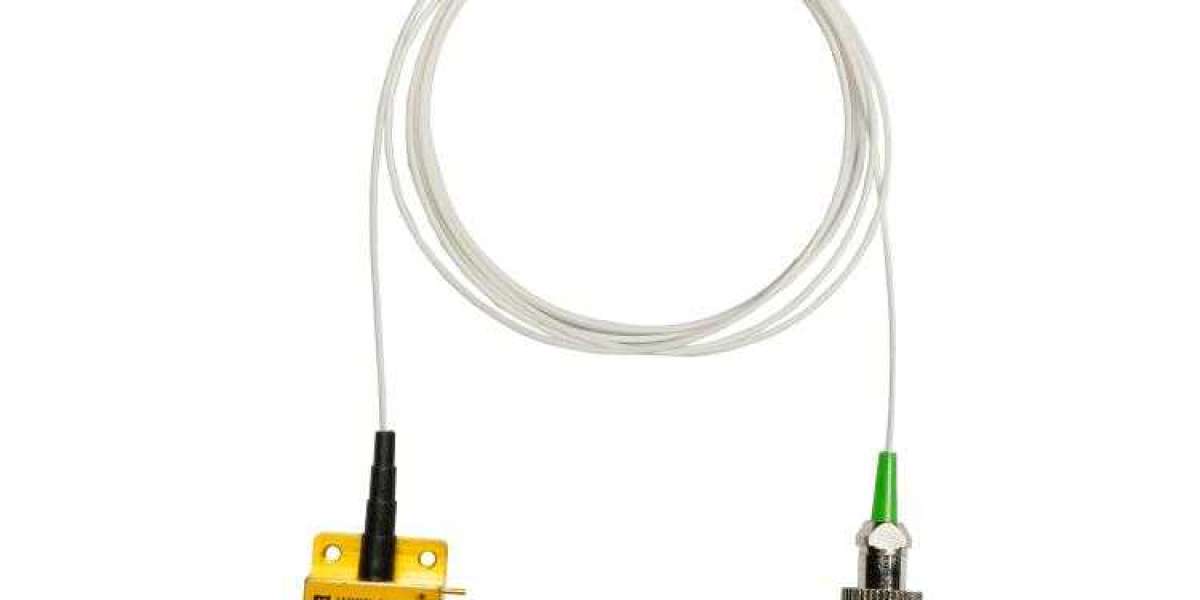
For example, the NEON HSPD high-speed InGaAs photodetector offers multiple frequency-band configurations, allowing engineers to evaluate options according to their specific measurement requirements.
The comparison should include the full operating environment, not just the nominal bandwidth.
Conclusion
InGaAs technology is valuable for near-infrared detection, but material selection is only the beginning. The final performance of a detector depends on the active structure, optical coupling, electrical matching, packaging, and operating conditions.
By comparing wavelength compatibility, responsivity, bandwidth, and power handling together, engineers can identify a suitable detector for their optical or microwave application. NEON's product specifications provide a starting point for that evaluation.









