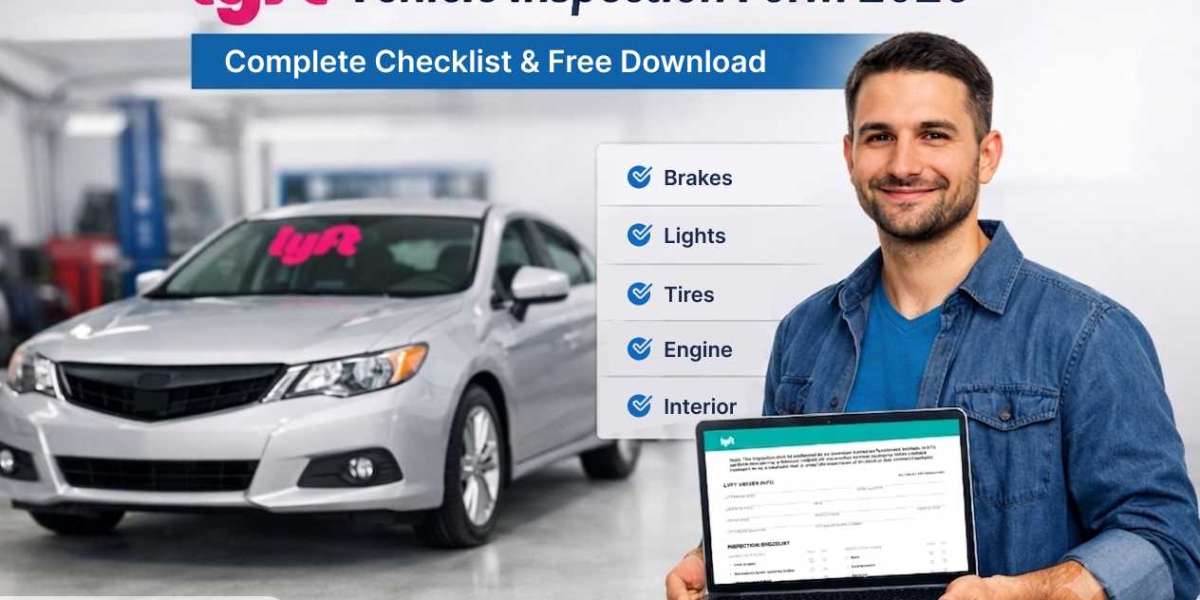

Quick answer: The Lyft vehicle inspection form is the official safety checklist that a certified mechanic has to complete and sign before you can drive for Lyft. It is a 19-point inspection covering brakes, tires, steering, lights, seat belts, glass and mirrors, with each item marked pass or fail. Your car must pass every point, and the signed form expires one year after the inspection date. You can get it done at a shop, at a Lyft Hub, or online from your phone in about 15 minutes with Chex.AI.
Whether you're a new driver waiting for approval or a current one facing an annual renewal, this guide explains what's on the Lyft inspection form, how to pass it the first time, what it costs and how to submit it. A free Lyft inspection form PDF is also available below.
What is the Lyft vehicle inspection form?
The Lyft vehicle inspection form is a standardized document that certifies your car is safe and roadworthy for rideshare driving. A certified mechanic or approved inspector examines each required component, marks it Pass or Fail, then signs and dates the form. Lyft won't activate your vehicle until a passing form is on file.
You may also see it called the Lyft inspection form, Lyft car inspection form, Lyft driver inspection form or Lyft inspection sheet. They are all the same document. Every applicable point must pass, so a single fail means your car isn't approved until it's repaired and re-inspected.
Important: the form expires one year after the inspection date, not after the date Lyft approves it. Write down the date on your copy so you can renew before it runs out.
Do you need a Lyft inspection in 2026?
Yes. A passing vehicle inspection is required in two situations:
- New drivers: before your vehicle is approved and you can take your first ride.
- Existing drivers: at renewal, usually every 12 months. A few markets use a two-year cycle.
Your renewal interval, approved inspection locations and the exact form all depend on your city and state. In some states, TNC (Transportation Network Company) regulation sets the requirement, not Lyft itself, which is why rules can change as soon as you cross a state line. Always confirm the rules where you'll actually be driving.
The Lyft 19-point inspection checklist
Most Lyft markets use a 19-point safety inspection. Some states require a longer 22- or 25-point version. The inspection isn't a full mechanical teardown. It confirms your car is safe to carry passengers. Here is what a standard Lyft inspection checklist covers:
Inspection point | What the inspector checks |
Foot brakes | Pad/shoe thickness and stopping ability |
Emergency / parking brake | Holds the vehicle firmly in place |
Steering mechanism | Responsive, with no excessive play |
Windshield | No large cracks or obstructions |
Rear window other glass | Intact and clear |
Windshield wipers | Clear the glass effectively |
Headlights | High and low beams work |
Tail lights | Fully working |
Turn signal lights | Front and rear both work |
Brake lights | All light up when braking |
Hazard / emergency flashers | Operate correctly |
Reverse lights | Work when in reverse |
Front seat adjustment | Adjusts and locks properly |
Doors (driver passenger) | Open and close from inside and out |
Horn | Working |
Speedometer | Accurate and working |
Bumpers | Firmly attached, no sharp edges |
Muffler exhaust system | No leaks or excessive noise |
Tires (incl. tread depth) | Adequate tread, no visible damage |
Interior exterior mirrors, seat belts, body condition | Present, secure, undamaged (22/25-point states) |
Pass-first-try tip: the most common failures are worn tires, worn brakes and a burned-out bulb. All are cheap to fix and easy to check yourself the day before. Walk around the car with the lights and signals on, and check tread depth with a penny before you book.
Lyft car requirements you need to meet first
Passing the inspection also means meeting Lyft's baseline vehicle standards. In most markets, your car must:
- Fall within your city's vehicle age limit (limits vary widely by market).
- Have 4 doors and seat at least 5 people, including the driver.
- Have no salvage, rebuilt or branded title.
- Carry valid registration and in-state insurance.
- Be free of major body damage (cosmetic standards are stricter for Lyft Lux).
Requirements differ from city to city, so check your local rules before you book an inspection. https://www.chex.ai/blogs/lyft-vehicle-inspection-form-2026