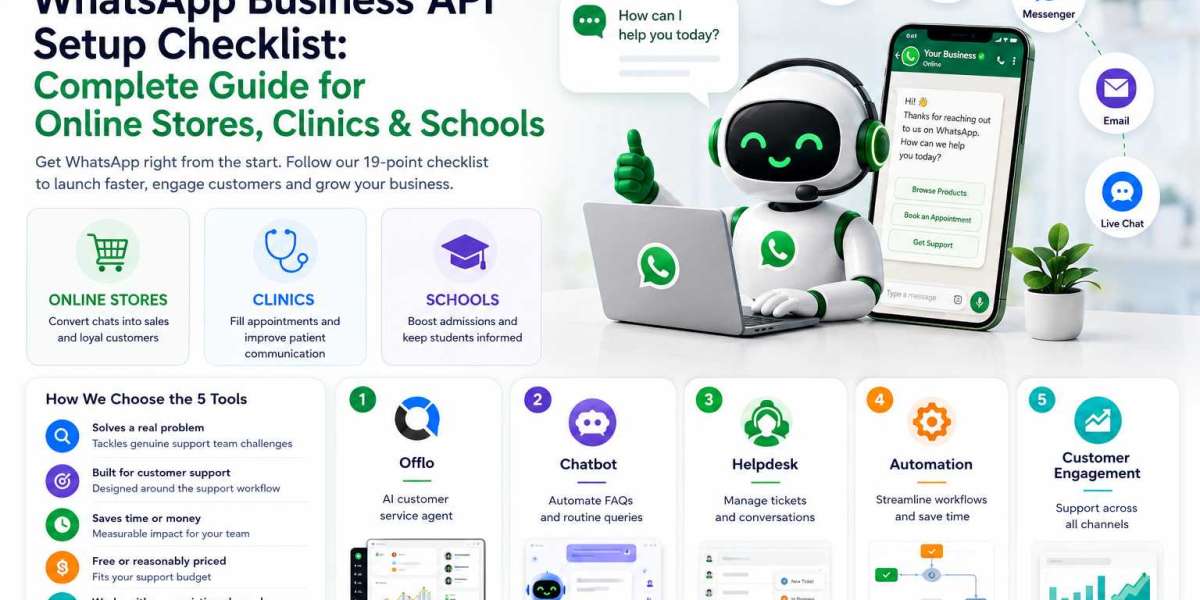

A customer follow-up automation checklist is a standardized list of 19 checks that every online store, clinic and school should pass before automating reminders, re-engagement and recovery messages. It covers triggers, timing, consent, personalization, handoff and reporting, and it can be completed in-house or with an AI revenue platform like Offlo.
If you sell online, take bookings or manage admissions, most revenue is lost after the first conversation, not during it. A cart is left behind, a patient misses an appointment, a student enquiry goes cold. Pass the checklist and follow-ups run on time, in context and without annoying anyone.
This guide gives you the complete follow-up automation checklist, a plan for each industry, a breakdown of what to prepare, and every option for getting started, including how to turn conversations into completed work with offlo.ai.
What is a follow-up automation review?
A follow-up automation review is a readiness check that confirms your triggers, timing, consent and customer data are set up so automated messages help customers instead of annoying them. It covers everything from cart recovery and appointment reminders to application follow-up, fee reminders and re-engagement.
Online stores, clinics and schools run this review before launching sequences, then repeat it whenever offers, services or policies change. The results are recorded on a simple follow-up plan signed off by whoever owns customer communication, and supported by tools such as Offlo marketing and workflow automation.
Key facts about follow-up automation reviews:
- Recommended before any business switches on its first automated sequence
- Worth repeating every quarter, or after any change to offers, services or fees
- Covers 19 standardized checkpoint areas
- Can be completed in-house or with an all-in-one platform like ai
- Sequences should stop the moment a customer replies, and anything sensitive should go to a human
The complete customer follow-up automation checklist
Whether you recover carts on Shopify, fill appointment slots or chase admission enquiries, the core follow-up checklist is nearly identical. Here is every item your team should evaluate, grouped by category.
Triggers and timing checks
Checklist item | What to look for | Common fail reasons |
First-reply speed | Instant answer before any follow-up starts | Slow first response, cold lead |
Cart or enquiry trigger | Sequence starts when a cart, enquiry or booking is left open | Trigger fires too early or never |
Appointment reminders | Pre-visit reminders with confirm or reschedule options | Reminders sent without a way to reply |
Missed-visit follow-up | Automatic message after a no-show or missed appointment | Patients never rebooked |
Recall and rebooking | Prompts for check-ups, repeat treatments or repeat purchases | One-off customers who never return |
Application and fee follow-up | Reminders for documents, deadlines and payments | Students lost at the paperwork stage |
Send windows | Messages go out at sensible hours | Midnight messages, bad timing |
Delay rules | Gaps between messages feel natural | Three messages in one hour |
Stop on reply | Sequence ends the moment the customer responds | Follow-ups sent after a reply |
Re-engagement | Win-back message for quiet contacts | Old leads never contacted again |
Message and channel checks
Checklist item | What to look for | Common fail reasons |
Approved templates | WhatsApp templates approved before launch | Rejected or missing templates |
Opt-in and opt-out | Consent captured and unsubscribes honoured | Messaging people who said no |
Personalization | Name, product, branch or programme included | Generic blasts to everyone |
Right channel | WhatsApp, Instagram, Messenger, web or email chosen per customer | Everything sent on one channel |
Approved knowledge | AI replies use only content you have approved | Wrong prices, invented policies |
Handoff, CRM and reporting checks
Checklist item | What to look for | Common fail reasons |
Human handoff | Full conversation passed to staff with context | Customer repeats everything |
Unified CRM record | One profile with tags, fields and audiences | Duplicate contacts, no history |
Segments | Audiences built from behaviour and stage | One message for every customer |
Results reporting | Recovered carts, bookings and enrolments tracked | No proof sequences are working |
Pro tip: The single most common reason follow-up automation fails is a sequence that keeps sending after the customer has already replied. Switch on stop-on-reply for every sequence first, then test each one with your own phone number before it goes live.
Online store follow-up plan: What you need
The online store follow-up plan is a one-page document your team fills out after running through the 19-point checklist above. Without it, there is no clear record of which sequences are live, who owns them and what they are meant to recover.
How to get the online store follow-up plan
You have three ways to build and complete your plan:
- Build it in a spreadsheet. Copy the 19 items above into a sheet and mark each pass or fail. This works well for small Shopify stores.
- Get it from an agency or consultant. Many ecommerce and email agencies map follow-up journeys during onboarding. Ask for the plan by name.
- Complete it with Offlo. The Offlo ecommerce platform joins your Shopify data, shared inbox and CRM, so cart recovery, order support and repeat-purchase follow-ups run from one workspace. Its AI agent answers with your store in view, and campaigns stop automatically when a shopper replies.
What the online store follow-up plan includes
A standard plan asks for:
- Store information: Store name, platform (such as Shopify), channels connected, active sequences
- Owner information: Name, role and the person responsible for each sequence
- 19-point checklist: Pass or fail for each item above
- Approval note: Confirmation that templates, offers and policies are current
- Date: Review again each quarter, or after any promotion or policy change
Once your plan is complete, switch on your sequences one at a time. You can book a demo for a walkthrough or compare pricing first.
Clinic and school follow-up plans: Requirements by industry
The clinic and school follow-up plans use the same 19-point checklist as the online store plan, but each has its own focus. Most of the setup carries over, so if you run more than one type of business you usually build the foundation only once.
How to get the clinic follow-up plan
Clinics, dental practices and wellness centres can complete the plan through:
- An internal review. The practice manager walks through the 19 checks and records the result.
- A compliance or operations lead. Many groups already have someone who signs off patient-facing messages.
- Online with Offlo. The Offlo healthcare platform runs reminders and confirmations inside the conversation, follows up on unbooked enquiries and missed appointments, and supports recall and rebooking. Routine questions are answered out of hours, and clinical matters go to your team.
How to get the school follow-up plan
Schools, colleges, universities, academies and coaching centres can complete theirs through:
- An admissions team review. Counsellors confirm deadlines, fees and programme details are current.
- A pipeline audit. Check that every enquiry has a stage, an owner and a next step.
- Online with Offlo. The Offlo education platform qualifies enquiries, sends segmented WhatsApp campaigns and follow-up sequences that stop when a student replies, and keeps fee, batch and parent communication organised in one inbox.
Can one follow-up setup serve every industry?
Yes, in most cases. The 19-point checklist is standardized, so your consent rules, templates, shared inbox and CRM can be reused across stores, clinics and schools. There are a few exceptions, though:
- Healthcare: Follow-ups must stay non-clinical. Symptoms, medication and test results go to the treating team, not the AI.
- Education: Fee and deadline reminders must match approved programme content, with counsellor handoff for complex cases.
- Ecommerce: Offers, stock and order status must stay in sync with your store, so recovery messages never promise what is unavailable.
When in doubt, start with the shared checklist and add industry checks afterwards. The Offlo FAQ or the contact page can point you to the right setup.
Final thoughts
Good follow-up is the difference between a lost lead and a completed order, booking or enrolment. Set clear triggers, respect consent, stop sequences when customers reply and keep humans in the loop for anything sensitive.
If you want sales, support and follow-up in one workspace, offlo.ai brings the AI agent, inbox, automation, CRM and marketing together. Explore the setups for ecommerce, healthcare and education, or book a demo to see it with your own channels.









