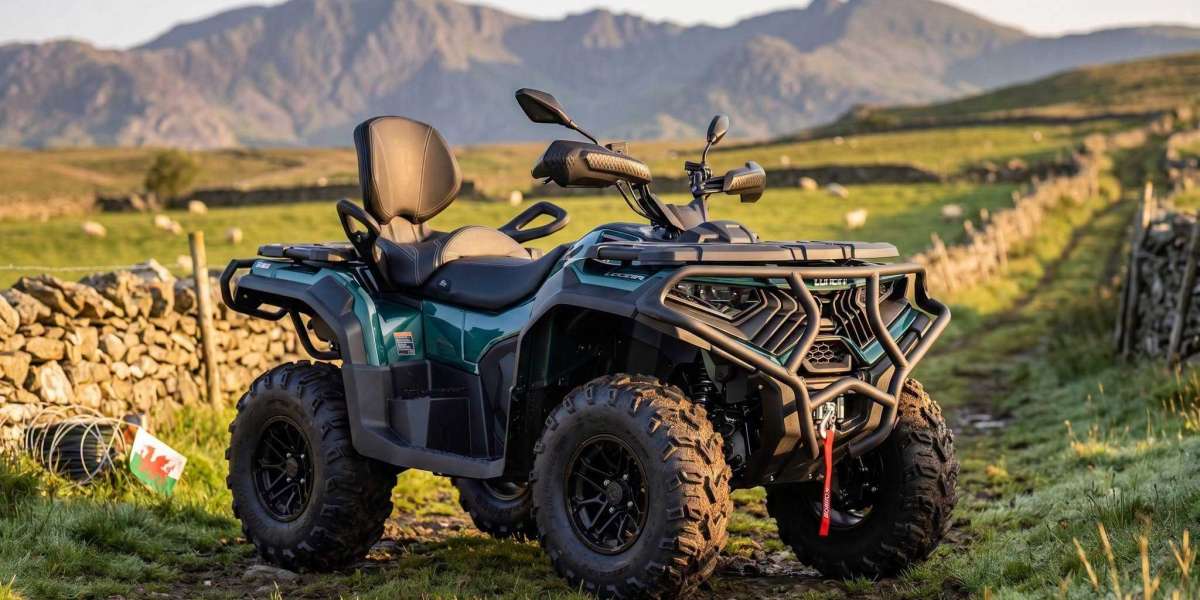

Not every ATV rider has the same expectations. Some need a vehicle for farm work, hauling, and towing, while others prioritize trail riding, outdoor exploration, or high-performance off-road adventures. A single ATV configuration cannot meet all these requirements equally well.
This is why ATV manufacturers develop different models with specific engine sizes, chassis designs, suspension systems, seating configurations, and utility features. These differences are not simply about appearance or engine displacement. They reflect how riders use their vehicles and the conditions they encounter.
So, how do manufacturers decide what goes into each ATV model? The answer lies in matching vehicle design with rider needs, terrain, and intended applications.
Engine Size and Power Delivery Match Different Riding Requirements
Engine displacement is one of the first factors manufacturers consider when developing different ATV models. Different riders require different levels of power, acceleration, and torque.
For example, recreational riders exploring forest trails or open fields may find a 400cc–500cc ATV sufficient for their typical riding conditions. These models can offer a practical balance between power, vehicle weight, and maneuverability.
For riders who regularly encounter steep slopes, muddy terrain, or mixed off-road conditions, 600cc–700cc models can provide additional power and torque.
Meanwhile, 800cc–1000cc ATVs are generally designed for more demanding applications where stronger acceleration, greater torque reserves, or heavy-duty performance are required.
Manufacturers also consider throttle response and power delivery. A utility ATV may prioritize controllable low-speed torque, while a recreational model may emphasize responsive acceleration.
Chassis and Suspension Are Designed Around Terrain
Different riding environments place different demands on an ATV's chassis and suspension.
For recreational trail riding, manufacturers often focus on maneuverability, suspension comfort, and handling across uneven surfaces. A suitable wheelbase and suspension setup help the vehicle navigate narrow trails, bumps, and changing terrain.
Utility ATVs have different priorities. Their chassis must support cargo racks, towing equipment, and additional working loads. Suspension components are selected to handle these demands while maintaining stability.
Ground clearance is another important consideration. Models intended for rocky trails, muddy paths, or uneven ground may feature greater clearance to reduce the risk of underbody impacts.
Rather than using one suspension configuration across every model, manufacturers adjust suspension travel, damping characteristics, chassis dimensions, and component strength according to the vehicle's intended application.
Seating and Ergonomics Reflect Different Rider Preferences
Rider comfort and vehicle control depend heavily on ergonomics.
A recreational ATV typically features a riding position designed for active movement and maneuverability. Handlebar positioning, seat shape, footrest placement, and control accessibility all influence how easily riders can shift their weight and maintain control.
Utility models may prioritize a comfortable, upright seating position that supports longer working hours. Their controls and storage arrangements are often designed around practical operation.
Two-up ATVs require a different approach altogether. These models need additional passenger seating, appropriate footrests, and a chassis configuration designed to accommodate the extra occupant.
Manufacturers must consider both rider comfort and safe vehicle control when developing these configurations.
Utility Features Depend on How Riders Use Their ATVs
Not every ATV needs the same equipment.
For utility-oriented riders, practical features can be more important than maximum speed or aggressive styling.
Common utility-focused features include:
Front and rear cargo racks for transporting tools and equipment.
Tow hitches for pulling trailers or other compatible loads.
Electronic power steering (EPS) to reduce steering effort.
Selectable 2WD/4WD and differential lock modes for different terrain conditions.
Protective components designed for demanding working environments.
Recreational models may place greater emphasis on suspension performance, riding comfort, responsive handling, and storage for personal equipment.
The goal is to provide useful equipment without adding unnecessary weight, complexity, or cost to the vehicle.
Vehicle Weight and Dimensions Must Balance Performance and Usability
ATV manufacturers cannot design vehicles around engine power alone. Overall weight, wheelbase, width, and turning characteristics also affect how an ATV performs.
A compact ATV may be easier to maneuver through narrow trails and confined spaces. A larger utility ATV, on the other hand, may offer more cargo capacity, additional seating space, and greater stability for its intended workload.
Vehicle weight also influences acceleration, braking, suspension response, and maneuverability.
Manufacturers therefore need to balance structural strength, equipment requirements, and overall vehicle dimensions. Adding stronger frames or more features may improve certain capabilities, but excessive weight can make the vehicle less suitable for some riding environments.
Safety and Control Features Are Adapted to Vehicle Applications
Different ATV models may require different approaches to rider control and protection.
For example, selectable drivetrain modes allow riders to adapt traction to changing terrain. EPS can make steering more manageable, particularly when navigating rough surfaces or operating at low speeds.
Braking performance, tire selection, lighting, and protective components are also considered during vehicle development.
Manufacturers must evaluate how these systems work together rather than treating each feature as an independent upgrade. A powerful engine, for instance, needs an appropriate braking system and chassis setup to support its performance.
Why Manufacturers Offer Multiple ATV Models Instead of One Universal Design
Developing different ATV models allows manufacturers to address distinct market requirements without compromising every vehicle with the same specifications.
A farmer who regularly transports equipment has different priorities from a recreational rider exploring mountain trails. Similarly, an experienced off-road enthusiast may want stronger performance, while a casual rider may prefer a more manageable vehicle.
Offering different engine sizes, chassis configurations, and equipment packages gives buyers more flexibility.
For manufacturers, this also means balancing production costs, component compatibility, market demand, and model positioning. Shared components may help improve production efficiency, while model-specific engineering ensures that each vehicle retains its intended characteristics.
Conclusion
ATV manufacturers design different models by considering how riders use their vehicles, where they ride, and what capabilities they need.
Engine performance, chassis dimensions, suspension, ergonomics, utility equipment, and safety systems all contribute to the final design.
There is no single ATV configuration that works best for every rider. The most effective design is one that balances performance, comfort, durability, and practicality for its intended application. Understanding these differences helps buyers choose an ATV based on real riding requirements rather than engine size or appearance alone.