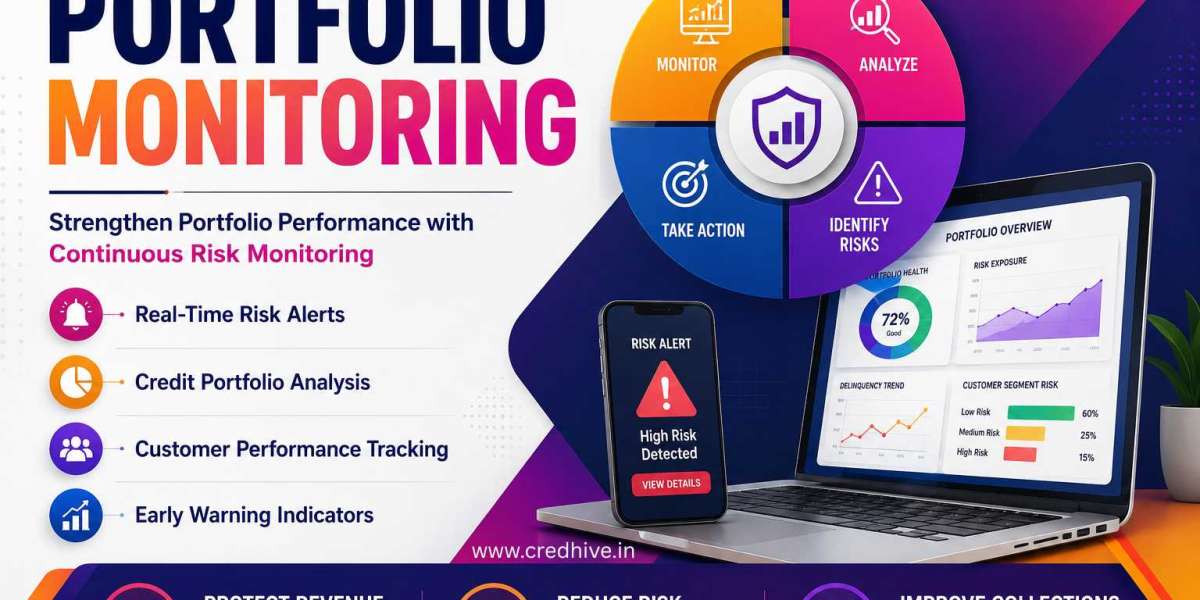

The lending landscape is evolving rapidly, and Non-Banking Financial Companies (NBFCs) are facing increasing pressure to manage credit risk, maintain portfolio quality, and identify potential borrower defaults before they affect financial performance. Traditional portfolio monitoring methods, which often depend on periodic reviews and manual assessments, may not identify emerging risks quickly enough. As lending portfolios expand and business environments become more dynamic, NBFCs need smarter ways to track borrower financial health and detect warning signs.
Early Warning Systems (EWS) are transforming portfolio monitoring by helping NBFCs identify potential financial stress, track changes in borrower profiles, and respond to emerging risks proactively. By combining business intelligence, financial indicators, regulatory information, and automated alerts, these systems provide lenders with better visibility into their existing portfolios.
With technology-driven solutions such as AI-powered analytics and real-time business monitoring, NBFCs can move beyond traditional credit reviews towards continuous and data-driven risk management.
What Are Early Warning Systems in Portfolio Monitoring?
An Early Warning System is a risk monitoring mechanism that identifies indicators of potential financial distress in borrowers, businesses, or loan portfolios. It helps NBFCs recognize unusual changes in business performance, financial stability, repayment behaviour, and regulatory compliance before they develop into serious credit issues.
In portfolio monitoring, EWS continuously evaluates relevant information to identify patterns that may indicate increasing credit risk.
Some important indicators include:
Declining revenue or profitability.
Increasing outstanding liabilities.
Frequent changes in company directors.
New litigation or legal proceedings.
Delayed statutory filings and compliance irregularities.
Changes in company ownership or business structure.
Multiple borrowing-related charges.
Negative developments in related businesses.
By tracking these indicators, NBFCs can identify borrowers who may require additional scrutiny, financial review, or closer monitoring.
Why Traditional Portfolio Monitoring Is No Longer Enough
Many NBFCs still depend on periodic borrower reviews, financial statements, repayment records, and manual verification processes. Although these methods remain important, they may not provide sufficient visibility into changing business conditions between review cycles.
Some major limitations include:
1. Delayed Risk Identification
Periodic assessments may overlook important changes occurring between review cycles. Financial difficulties, legal developments, or compliance issues can emerge before the next scheduled evaluation.
2. Fragmented Business Information
Borrower information is often spread across multiple databases, regulatory platforms, financial records, and internal systems. Collecting and analysing these details manually can slow down risk assessments.
3. Limited Portfolio Visibility
When NBFCs manage large borrower portfolios, manually tracking every company becomes difficult. Without centralized monitoring, identifying high-risk accounts can become challenging.
4. Reactive Risk Management
Traditional monitoring often focuses on identifying problems after repayment delays or financial deterioration have already occurred. This limits the opportunity for early intervention.
Early Warning Systems address these limitations by providing structured risk indicators and timely information that support continuous portfolio assessment.
How Early Warning Systems Are Reshaping Portfolio Monitoring for NBFCs
Early Warning Systems are changing how NBFCs evaluate borrower risk and manage existing credit exposure. Instead of depending entirely on periodic financial reviews, lenders can use business information and automated monitoring to identify developments that may affect borrower creditworthiness.
1. Identifying Financial Stress Before Default
One of the most important benefits of EWS is its ability to highlight potential financial deterioration before it results in repayment problems.
Changes in revenue, profitability, liabilities, borrowing patterns, and other financial indicators can help lenders identify borrowers requiring closer attention.
For example, a company experiencing declining profitability alongside increasing liabilities may indicate growing financial pressure. An early warning mechanism can flag such developments for further investigation.
2. Monitoring Corporate and Regulatory Developments
Financial performance is not the only factor influencing borrower risk. Changes in corporate structure, director appointments, regulatory filings, and legal proceedings can also affect business stability.
Early Warning Systems help NBFCs track developments such as:
New director appointments and resignations.
Changes in company ownership and management.
New MCA filings and statutory updates.
Litigation and legal proceedings.
Changes in registered borrowing-related charges.
Compliance-related developments.
Monitoring these indicators gives lenders a broader understanding of borrower activity beyond traditional financial statements.
3. Automating Risk Alerts and Notifications
Manual portfolio reviews require significant time and resources, particularly when lenders manage thousands of business accounts.
Automated monitoring systems can help track selected companies and generate alerts when relevant changes occur. These notifications allow credit and risk teams to investigate developments without repeatedly checking multiple information sources.
For instance, an NBFC monitoring a business borrower may receive an alert about a new legal proceeding, director change, or significant corporate filing.
This improves the speed of risk assessment and helps teams prioritize accounts that need attention.
4. Strengthening Borrower Due Diligence
Early Warning Systems also support ongoing borrower due diligence after loan disbursement.
Instead of treating due diligence as a one-time activity during loan approval, NBFCs can continue evaluating borrower information throughout the credit lifecycle.
By reviewing financial information, corporate records, litigation developments, and compliance indicators, lenders can maintain better visibility into borrower profiles.
This is particularly useful during loan renewals, credit limit revisions, and periodic portfolio reviews.
5. Improving Portfolio-Wide Risk Visibility
As lending portfolios grow, NBFCs need a consistent approach to identifying and prioritizing potential risks across multiple borrowers.
EWS-supported portfolio monitoring helps credit teams organize companies according to their risk indicators and monitoring requirements.
This allows lenders to:
Identify borrowers showing multiple warning signals.
Prioritize high-risk accounts for review.
Track changes across existing portfolios.
Support portfolio-level risk assessments.
Improve the allocation of credit monitoring resources.
Centralized portfolio visibility helps management make more informed decisions about existing credit exposure.
Key Early Warning Indicators NBFCs Should Monitor
An effective Early Warning System should consider multiple dimensions of business activity rather than relying on a single risk indicator.
The following table highlights important indicators NBFCs can track while monitoring business borrowers.
Information Category | Early Warning Indicator | Potential Risk |
|---|---|---|
Financial Performance | Declining revenue and profitability | Financial deterioration |
Company Compliance | Delayed statutory filings | Compliance concerns |
Director Information | Frequent director changes | Management instability |
Litigation Records | New legal proceedings | Potential legal exposure |
MCA Charges | Increasing borrowing-related charges | Higher debt obligations |
Corporate Structure | Ownership or management changes | Business instability |
Business Linkages | Negative developments in related entities | Connected business risk |
GST Information | Unusual filing patterns or available compliance concerns | Possible operational or compliance issues |
It is important to evaluate these indicators in context. A single development does not automatically indicate default or financial distress. Lenders should combine multiple signals with repayment history, financial analysis, and internal credit assessments.
Role of AI and Data Analytics in Modern Portfolio Monitoring
Artificial Intelligence (AI) and data analytics are making portfolio monitoring more efficient by helping financial institutions process large volumes of business information and identify patterns that may require attention.
Modern monitoring solutions can support several important activities.
Automated Data Analysis: AI-powered systems can help process corporate information, financial indicators, and regulatory developments from multiple sources.
Pattern Identification: Data analytics can highlight unusual changes and combinations of indicators that may require further investigation.
Risk Prioritization: Monitoring platforms can help credit teams prioritize borrowers based on defined risk parameters and emerging developments.
Continuous Monitoring: Automated tracking reduces dependence on manual checks and supports timely identification of relevant company changes.
Better Decision Support: Consolidated business intelligence gives lenders additional information for credit reviews, risk assessments, and portfolio management.
However, AI-generated alerts should support rather than replace professional credit judgment. NBFCs should validate relevant information before making lending or recovery decisions.
Benefits of Early Warning Systems for NBFCs
Implementing an effective Early Warning System can strengthen several aspects of credit risk management.
Benefit | How It Helps NBFCs |
|---|---|
Early Risk Detection | Identifies potential borrower stress at an earlier stage |
Better Portfolio Visibility | Provides a consolidated view of monitored businesses |
Faster Risk Assessment | Reduces time spent on repetitive manual checks |
Improved Due Diligence | Supports continuous borrower evaluation |
Timely Alerts | Highlights important corporate and financial developments |
Better Credit Decisions | Provides additional intelligence for risk reviews |
Operational Efficiency | Helps teams prioritize monitoring activities |
These benefits enable NBFCs to adopt a more proactive approach to managing credit exposure and maintaining portfolio quality.
How to Choose the Right Early Warning and Portfolio Monitoring Solution
Selecting the right portfolio monitoring solution is important for NBFCs looking to improve their risk management processes.
Before adopting a platform, financial institutions should evaluate the following capabilities:
Comprehensive Business Information: The solution should provide access to relevant corporate, financial, regulatory, and legal information.
Automated Monitoring: It should support continuous tracking of selected borrower companies.
Customizable Risk Alerts: Credit teams should be able to monitor developments relevant to their lending policies.
Historical Business Insights: Access to historical company information can help identify changes and emerging patterns.
Director and Entity Linkages: The platform should help identify connections between companies and their directors.
Scalable Portfolio Management: It should support monitoring across large borrower portfolios.
Reliable Data Sources: Information should be sourced from credible databases and validated before being used in credit assessments.
A suitable solution should complement existing lending workflows and help credit teams make more informed monitoring decisions.
How Credhive Supports Smarter Portfolio Monitoring for NBFCs
Credhive helps financial institutions strengthen business risk assessment and portfolio monitoring through comprehensive corporate intelligence and data-driven insights.
Designed for banks, NBFCs, fintech companies, and financial institutions, Credhive brings together essential business information to support borrower evaluation, ongoing monitoring, and risk identification.
Through its Credit Decision Engine and Portfolio Monitoring capabilities, Credhive helps financial professionals access and evaluate important business developments, including:
MCA filings and corporate registration information.
Financial indicators and company performance details.
Director appointments, resignations, and linkages.
Litigation records and legal developments.
Registered borrowing-related charges.
GST and compliance-related information.
Changes in company profiles and corporate structures.
These insights help lenders monitor existing borrowers, identify developments that may require attention, and strengthen their business due diligence processes.
By combining Business Information Reports, Portfolio Monitoring, and business intelligence capabilities, Credhive supports a more structured approach to credit evaluation and ongoing risk management.
Conclusion
Early Warning Systems are reshaping portfolio monitoring for NBFCs by shifting the focus from periodic borrower reviews to more continuous and proactive risk assessment. With automated alerts, business intelligence, financial indicators, and corporate information, lenders can identify potential warning signs earlier and improve visibility across their credit portfolios.
As lending operations become increasingly data-driven, NBFCs need reliable monitoring capabilities to evaluate borrower developments, prioritize risk reviews, and support informed credit decisions.
Adopting an effective portfolio monitoring solution can help financial institutions strengthen due diligence, improve operational efficiency, and build a more proactive credit risk management framework.
Frequently Asked Questions (FAQs)
1. What is an Early Warning System in NBFCs?
An Early Warning System in NBFCs is a risk management mechanism that identifies indicators of potential borrower financial stress, compliance issues, and business instability. It helps lenders recognize possible credit risks before they develop into serious repayment problems.
2. How do Early Warning Systems improve portfolio monitoring?
Early Warning Systems improve portfolio monitoring by tracking borrower developments, identifying unusual business changes, generating timely alerts, and helping credit teams prioritize accounts that require additional attention.
3. What are the key early warning indicators for NBFCs?
Important indicators include declining financial performance, increasing liabilities, new litigation, frequent director changes, regulatory filing delays, unusual borrowing-related charge developments, and changes in corporate ownership.
4. Why is real-time portfolio monitoring important for NBFCs?
Real-time portfolio monitoring helps NBFCs identify relevant borrower developments without waiting for scheduled reviews. It improves portfolio visibility and supports timely investigation of potential risks.
5. How does AI support early warning systems in banking and NBFCs?
AI supports early warning systems by analysing large volumes of business information, identifying patterns, highlighting unusual developments, and helping prioritize borrowers for further risk assessment.